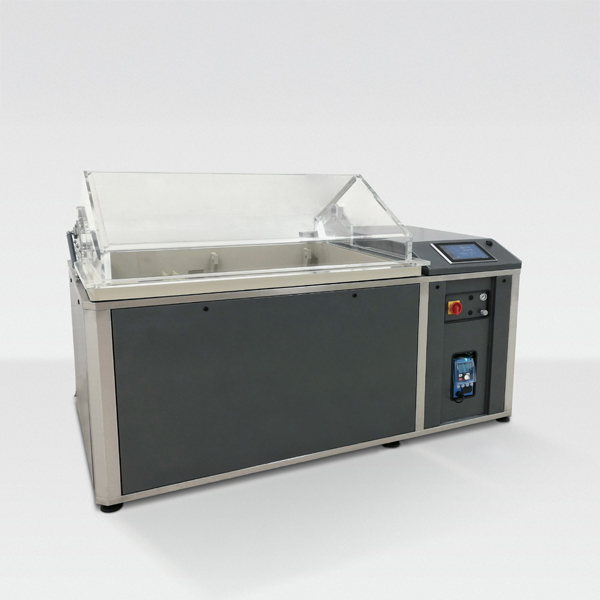

Salt fog chambers
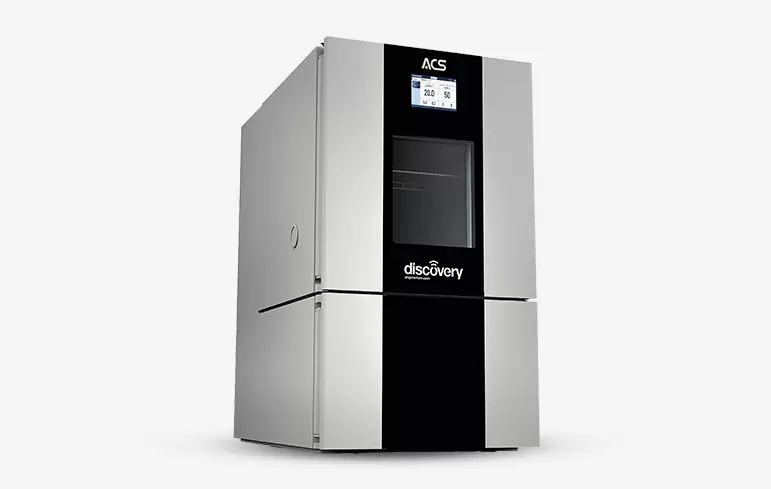
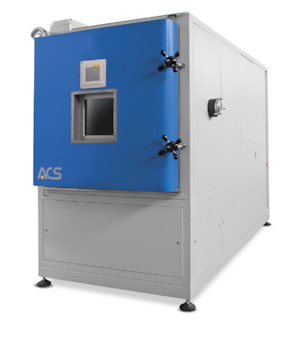
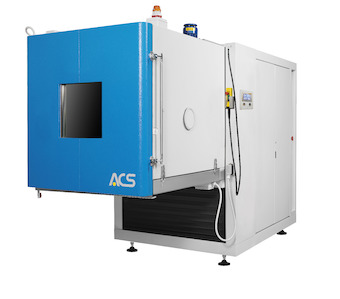
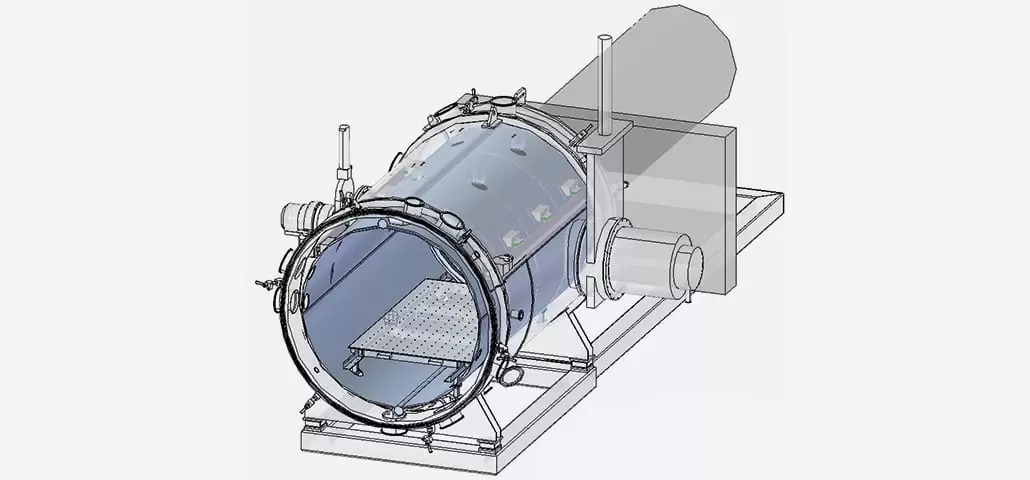
Angelantoni’s DCTC series salt spray chambers are used to simulate corrosion processes on painted and/or metallic surfaces in the laboratory. These chambers allow the performance of corrosion tests according to UNI 9399 (Filiform Corrosion) and UNI 9590 (Scab Corrosion) standards.
Description
Angelantoni’s DCTC series salt spray chambers are used to simulate corrosion processes on painted and/or metallic surfaces in the laboratory. These chambers allow the performance of corrosion tests according to UNI 9399 (Filiform Corrosion) and UNI 9590 (Scab Corrosion) standards. In addition, DCTC salt spray chambers allow the performance of salt spray tests according to various international and manufacturer’s standards.
DCTC salt spray chambers can also perform corrosion tests according to the most important national and international standards (continuous salt spray tests – ISO 9227, ASTM B117 and DIN 50021; alternate salt spray tests- DIN 50907), as well as tests specific to the norms or standards of some of the world’s largest automobile manufacturers.
“Corrosion is the destructive attack of a metal by chemical or electrochemical reaction with its environment.”
A metal surface with a professional painted finish should never corrode, as one of the main functions of paint (besides the aesthetic factor) is to protect the metal from corrosion.
Saline environments are particularly corrosive by themselves, which is why manufacturers of parts for automobiles, ships, railroads, as well as industries related to paints, varnishes or any other type of treatment or pretreatment of metals include in their quality protocols the performance of salt spray or dry corrosion tests.
If the substrate where the paint is applied has not been properly treated, possible dust motes between the paint and the substrate or flaws in the paint produced, for example, by a stone jumping from the road, can be the beginning of a corrosion process.
Alava Ingenieros and its technology partner ACS offer their customers the DCTC series salt spray chambers (Dry Salt Spray Chamber DCTC1200Corrosion Test Cabinet). With the DCTC salt spray chambers they can not only perform corrosion tests according to UNI 9399 (Filiform Corrosion) and UNI 9590 (Scab Corrosion) standards, but also allow the performance of salt spray tests according to various international and manufacturer standards (continuous salt spray, alternating salt spray, relative humidity control, etc.).
Within the range of salt spray chambers, more or less complex versions are offered in all available sizes, thus adapting the solution to the particular needs of the customer, both in terms of technical complexity and cost.
Some of the most important dry corrosion or salt spray test standards that can be performed with DCTC salt spray chambers are:
ASTM B117, ASTM B287, ASTM B369 (CASS), ASTM D1735 ASTM D2247, ASTMG85, MIL-STD 202F, MIL-STD 810E, MIL-STD 883C, BS 2011, BS 3900, BS 7479, DIN 50907, DIN 50021, DIN 50017, DIN 40046, DIN 50014, UNI 9399, UNI 9590, ISO 7253, ISO 9227.
As well as manufacturer’s standards for:
GM/FORD, FIAT, BMW/VW/VOLVO/NISSAN/TOYOTA, RENAULT, VDA, among others.