

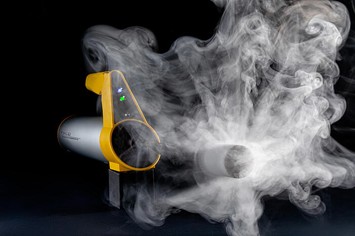

Description
Cleanroom airflow visualization and mapping devices are specialized tools used to perform airflow studies in critical environments such as pharmaceutical laboratories, operating rooms, ISO rooms, and semiconductor manufacturing areas. These studies are essential to comply with regulations such as ISO 14644-3, USP 797, USP 800, and NSF 49, which require visual evidence of air performance to ensure the safety and sterility of the environment.
The clean rooms are controlled environments designed to minimize the presence of particles, microorganisms and contaminants. In these spaces, airflow plays a crucial role in maintaining product, process and personnel sterility and safety.
Airflow visualization and mapping allow to observe and analyze how the air behaves inside the room, identifying possible risks, turbulent areas or infiltrations that could compromise the quality of the environment.
Main objectives:
- Verify the design and operation of the ventilation system (HVAC).
- Comply with international standards such as ISO 14644-3, EU GMP Annex 1, USP 797/800.
- Optimize the arrangement of equipment and personnel to avoid interference with air flow.
- Detect deviations that may cause cross-contamination or containment failures.
- Train personnel in good practices by means of real visualization of air behavior.
Other products you may be interested in
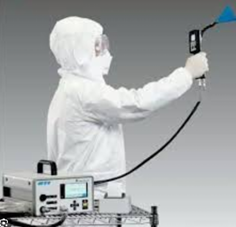
Filter validation
The filter leakage test (filter leak testing) is a critical technique in the validation and maintenance of clean roomsespecially in environments where air purity is essential, such as in the pharmaceutical industry, hospitals, biosafety laboratories and semiconductor manufacturing.
More information about Flow mapping
The most common applications in the pharmaceutical sector are:
- Design and performance validation
- Verify that the HVAC (heating, ventilation and air conditioning) system provides adequate laminar or turbulent flow.
- Ensures that there are no dead zones, recirculation or turbulence that could compromise sterility.
- Regulatory compliance
- Requirements of ISO 14644-3, USP 797/800, EU GMP Annex 1, among others.
- Flow recovery studies, smoke visualization, and containment testing in biosafety cabinets (NSF 49).
- Optimal location of equipment
- Determine how furniture, machinery or personnel affect airflow.
- Helps redesign the layout to minimize cross-contamination.
- Personnel training
- Visualizing airflow helps to raise awareness of the importance of movement within the cleanroom.
- It is used in simulations to teach good handling and handling practices.
- Investigation of deviations or contamination
- Identifies possible causes of environmental or microbiological contamination.
- Detects air infiltration from unclassified or poorly balanced areas.
- Containment testing
- In biological safety cabinets, it is visualized how contaminated air is contained.
- It is verified that the air does not escape to the operator or the environment.
- Pressure balance between zones
- Ensures that pressure differentials between classified and unclassified areas are correctly maintained.
- Prevents the entry of contaminated air.
- Maintenance and optimization studies
- After HVAC system changes, retrofits or maintenance, a new mapping is performed to validate performance.
