Share:

Far-field systems


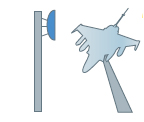
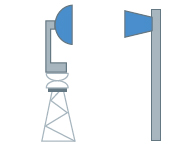
The purpose of far-field systems is to be able to characterize radiating devices, measuring at a sufficient distance so that the wavefront produced by the device can be considered flat.

Description


The object of the far-field systems is to be able to characterize radiating devices, measuring at a sufficient distance so that the wavefront produced by it can be considered flat.

The purpose of the far-field systems is to be able to characterize radiating devices, measuring at a sufficient distance so that the wavefront produced by it can be considered flat. This can be achieved in installations located outdoors (open field) or indoors (in anechoic chambers).

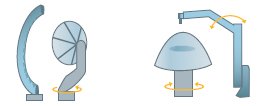
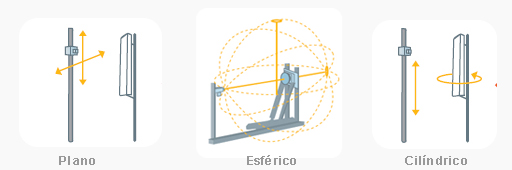
We offer these far-field systems completely turn-key according to the technical needs and budget of the client. We have a wide range of products for far-field measurement systems: multiple options of positioners, controllers, instrumentation, software, etc.
 

Other products you may be interested in

  • Near field systems


    A near-field measurement system is usually implemented indoors (anechoic chamber) and occupies relatively little space compared to a far-field or compact system.
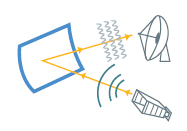
  • A compact field measurement system tries to achieve a flat wavefront in a smaller space than in a conventional far field.
    Compact field systems


    A compact field measurement system tries to achieve a flat wavefront in a smaller space than in a conventional far field.
  • A radar cross section (RCS) measurement system has as its object of study the observation of signal reflections emitted by a radar on objects in any position.
    Radar Cross Section Systems (RCS)


    A radar cross section (RCS) measurement system has as its object of study the observation of signal reflections emitted by a radar on objects in any position.
  • These are usually covered by radoms that have to protect them for their correct operation without interfering with data transmission and reception.
    Rádomos measurement systems


    These are usually covered by radoms that have to protect them for their correct operation without interfering with data transmission and reception.