
Description
Particle counting is an essential practice to ensure the quality, purity and safety of drugs, especially in sterile forms such as injectables, parenteral solutions and biologics. It involves measuring the quantity and size of undissolved solid particles present in a product or in the manufacturing environment.
Unwanted particles can:
– Cause adverse reactions in the patient (embolisms, inflammation, immunogenicity).
– Indicate faults in the process: wear, incompatibilities, defective filtration.
– To be evidence of microbiological contamination.
– Compromise the stability of the final product.
Therefore, particle limits are strictly regulated in pharmacopoeias.
Main particle counting methods
A. Methods for products (USP <788>, EP 2.9.19)
Counting by Light Obscuration (LO)
Main recommended method.
A beam of light passes through the liquid; each particle generates a shadow whose intensity correlates with its size.
- Fast, automatic
- High repeatability
- Suitable for particles ≥ 2 µm
B. Cleanroom Methods (ISO 14644-1 and GMP Annex 1)
1. Light scattering air particle counters
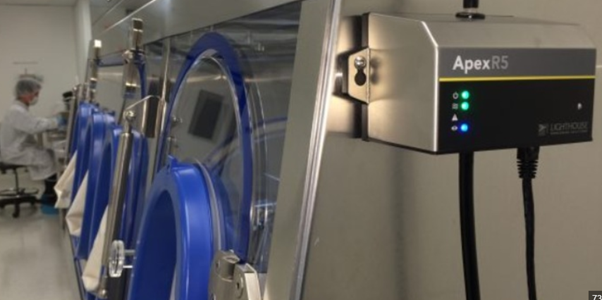
Electronic equipment that counts airborne particles (≥0.1 µm).
Applications:
– Clean room qualification
– Continuous monitoring in grade A
– Control of critical filling zones
2. Sedimentation and active sampling plates
Although they measure microbial load, they complement particle control.
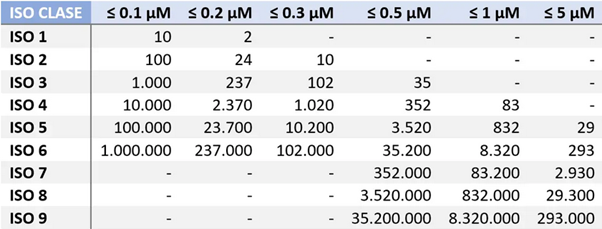
Cleanrooms (GMP Annex 1 / ISO 14644-1)
Example of limits for a Grade A area (critical zone):
Key applications in pharmaceutical manufacturing
– Aseptic filling and critical zone control
– Filtration verification in sterile processes
– Quality control of raw materials and excipients
– Final product release
– Real-time environmental monitoring
– Root cause analysis (Root cause analysis)
Current trends and technologies
- Real-time monitoring (PMS): ss connected 24/7 to SCADA/MES systems.
- Risk-based approach (QRM – ICH Q9): more monitoring at critical points, less in less relevant areas.
- More sensitive portable counters: dect submicron particles for biologicals and ATMPs.
- Integration with rapid microbiological analysis: fluorescence, cytometry, spectroscopy.
Other products you may be interested in
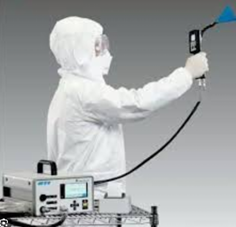
Filter validation
The filter leakage test (filter leak testing) is a critical technique in the validation and maintenance of clean roomsespecially in environments where air purity is essential, such as in the pharmaceutical industry, hospitals, biosafety laboratories and semiconductor manufacturing.