

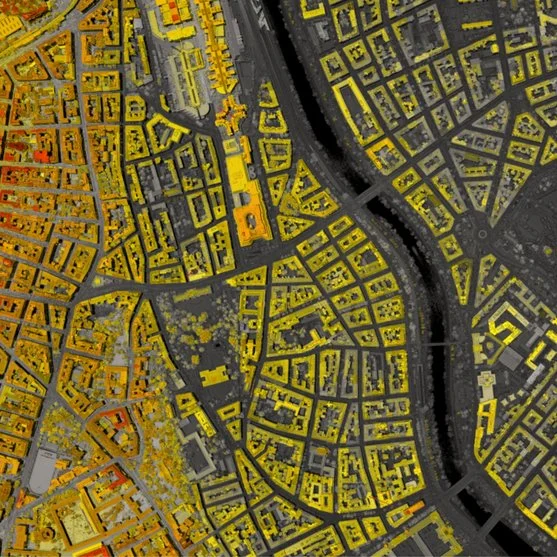

LiDAR for Autonomous Vehicle
Ouster’s LiDAR technology enables the accurate capture of three-dimensional data in a variety of industrial, security, traffic, automotive, robotics and crowd analysis applications. Its high-resolution digital sensors offer adaptable solutions for multiple environments and needs.
Description
Ouster’s LiDAR LiDAR technology technology enables the accurate capture of three-dimensional data in a variety of industrial, security industrial, security, traffic, automotive, robotics and crowd analysis applications.. Its high-resolution digital sensors offer adaptable solutions for multiple environments and needs.
Ouster LiDAR models:
- OSDome: Short-range sensor with a hemispherical field of view of 180° vertical and 360° horizontal, ideal for applications requiring complete coverage of the environment, such as perimeter security and crowd analysis.
- OS0: Short-range sensor with an ultra-wide 90° vertical field of view and a maximum range of 100 meters, suitable for applications in robotics and indoor mapping, where a wide and detailed view of the near environment is needed.
- OS1: Mid-range sensor with a 45° vertical field of view and a maximum range of 200 meters, designed for applications in autonomous vehicles and security systems, providing a balance between range and resolution.
- OS2: Long range sensor with a vertical field of view of 22.5° and a maximum range of 240 meters, ideal for applications in autonomous vehicles and trucks, where long distance sensing is required for safe navigation.
Real applications
Ouster LiDAR sensors are used in a variety of practical applications. In the industrial sectorthey are used to automate processes and improve operational efficiency. In security, they are integrated into surveillance systems to monitor perimeters and manage crowds effectively. Intraffic and intelligent transportation systems, they help to optimize vehicle flow and improve road safety. In automotive, they are essential for the development of autonomous vehicles, providing accurate data for navigation and obstacle detection. In robotics and drones, they enable precise autonomous navigation in complex environments. Finally, in crowd analytics, they are used to collect real-time data for the management and planning of public spaces.
Success stories
Ouster’s LiDAR sensors have been implemented in industrial automation projects, advanced perimeter security systems, traffic management in smart cities and development of autonomous vehicles, demonstrating their versatility and effectiveness in various sectors.
How to choose the right LiDAR sensor
When selecting an Ouster LiDAR sensor, it is essential to consider the necessary range, field of view and resolution required for the specific application. Ouster offers a range of sensors adaptable to different needs, from short to long range, ensuring an optimal solution for each project.
Documents
Other products you may be interested in
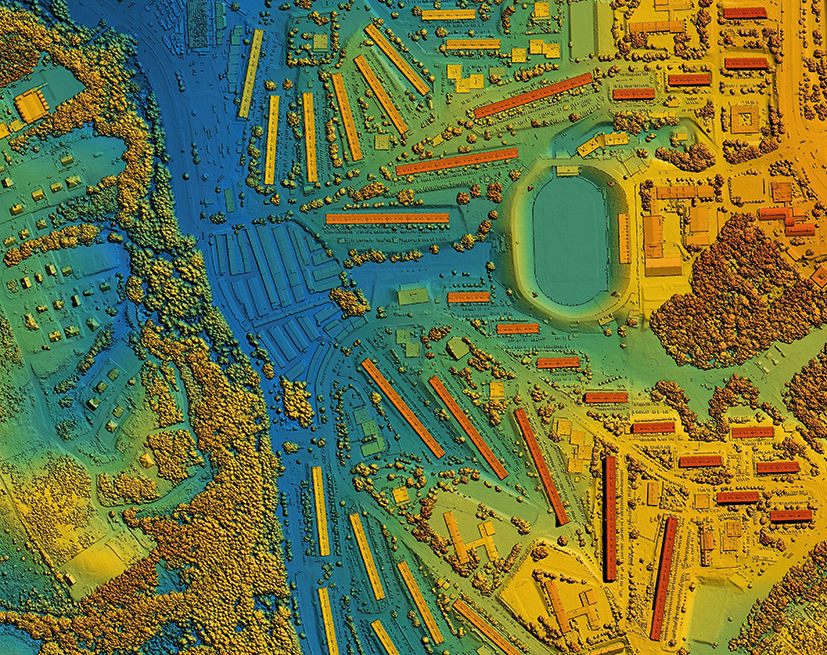
LiDAR for Drones
LiDAR (Light Detection and Ranging) technology for drones revolutionizes the way we capture environmental data. Using pulses of laser light, LiDAR measures distances with millimeter precision, creating detailed 3D maps in real time. LiDAR technology is ideal for surveying, precision agriculture and forestry management, improving efficiency and decision making and providing crucial information quickly and accurately.
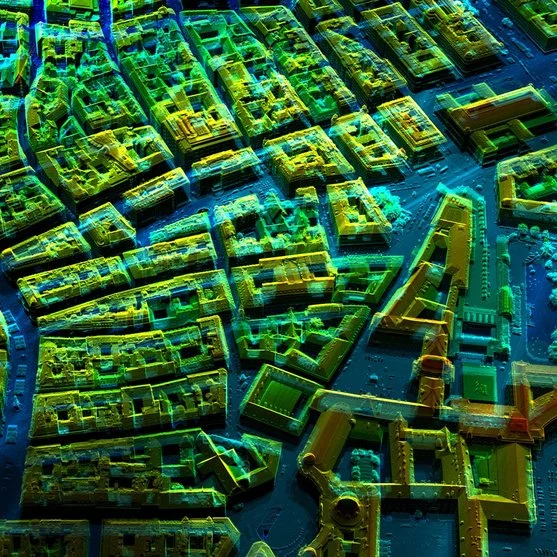
LiDAR for aircraft/helicopter
LiDAR technology for airplanes and helicopters makes it possible to create detailed topographic models (high-density 3D point clouds) with sub-meter accuracy. It is an essential tool for capturing 3D data of large territories such as agricultural, forestry or urban areas, industrial plants and open pit mines. Álava Ingenieros, in collaboration with Riegl, offers multiple LiDAR systems for manned aviation:
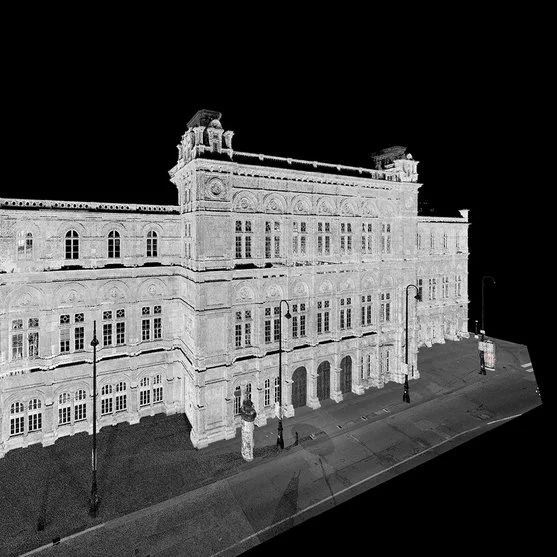
More information about LiDAR for Autonomous Vehicle
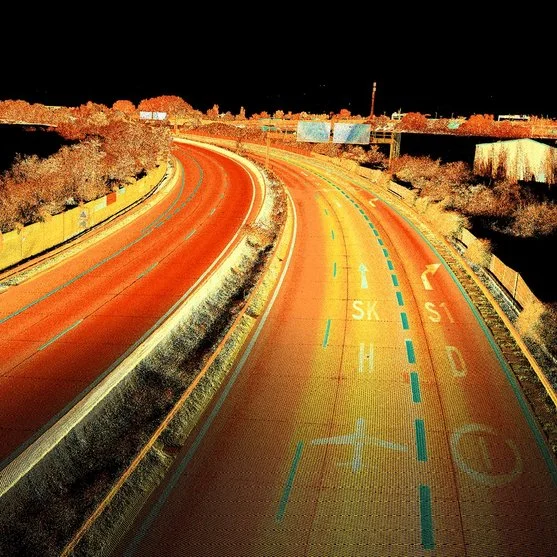
LiDAR technology is a key pillar in the development of autonomous vehicles, as it provides accurate perception of the environment, enabling vehicles to navigate safely and efficiently without human intervention. LiDAR systems generate 3D point clouds that provide a detailed view of the environment, helping vehicles to identify obstacles, calculate distances and make decisions in real time.
What is LiDAR for autonomous vehicles?
LiDAR for autonomous vehicles uses laser pulses to measure distances to surrounding objects and surfaces. Through this data, LiDAR systems create a three-dimensional model of the environment in real time, enabling autonomous vehicles to detect obstacles, pedestrians and other vehicles with sub-meter accuracy. This technology is essential for obstacle detection and collision avoidance, ensuring safer and more efficient driving.
Benefits of LiDAR in autonomous vehicles
LiDAR systems for autonomous vehicles offer multiple benefits:
- High accuracy: LiDAR sensors capture minute details of the environment, detecting even small or distant objects.
- Real-time perception: Generates real-time data, allowing the autonomous vehicle to respond quickly to changes in its environment.
- Adaptability to different conditions: LiDAR is effective both day and night and under different weather conditions.
LiDAR applications in autonomous vehicles
LiDAR for autonomous vehicles has several essential applications:
- Navigation and autonomous driving: Enables vehicles to map safe routes, identify obstacles and make decisions in real time.
- Traffic monitoring: LiDAR sensors can help manage urban traffic, optimizing traffic flow.
- Collision avoidance: By detecting obstacles in real time, the LiDAR system helps autonomous vehicles react quickly to avoid accidents.
- Position maintenance: LiDAR allows the vehicle to maintain a safe distance from other vehicles and nearby objects.
Riegl and RiPROCESS systems in LiDAR for autonomous vehicles
Riegl, a leader in LiDAR technology, offers advanced solutions for autonomous driving. Systems such as Riegl sensors provide accurate and detailed perception of the environment for autonomous vehicles. RiPROCESS software plays a crucial role in managing and processing the data captured by LiDAR, ensuring that large volumes of data are quickly converted into useful information for real-time decision making. RiPROCESS enables efficient visualization, processing and analysis of 3D point clouds generated by LiDAR sensors.
Advantages of Riegl RiPROCESS software
RiPROCESS optimizes the workflow of LiDAR data in autonomous vehicles, allowing:
- Fast processing: Converts large volumes of data into actionable information in real time.
- Advanced visualization: Facilitates the creation of detailed 3D models of the environment.
- Efficient analysis: Improves accuracy in data interpretation for safer autonomous driving.
LiDAR for autonomous vehicles in action
LiDAR systems, such as those provided by Riegl, have been successfully implemented in several autonomous vehicle projects, helping to improve safety and navigation efficiency in urban and highway environments. The ability of these systems to detect obstacles in real time has been key to the successful implementation of driverless vehicles.
Trust Riegl and RiPROCESS to provide advanced LiDAR solutions that boost the safety and efficiency of autonomous vehicles.
