

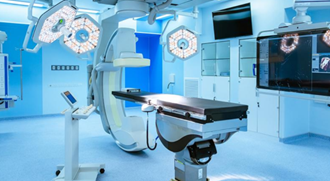

Description
Hydrogen peroxide is an environmentally friendly way to perform biodecontamination in isolators, hospital rooms, transfer hatches and other applications. H2O2 concentration levels are measured during biodecontamination to ensure that process conditions have been met.
Biodecontamination in isolators with hydrogen peroxide (H₂O₂) is a key process in pharmaceutical and biotech environments to ensure sterility in critical areas where sensitive products are handled.
It is the technique that uses vaporized hydrogen peroxide (VHP) or in mist form to eliminate microorganisms on surfaces and in the air inside isolators. It is used in the pharmaceutical industry to comply with GMP (Good Manufacturing Practices) standards.
Applications:
- Insulators, cRABS
- Transfer hatches; chambers
- Steam generators
- Incubators
- Production lines
Most commonly used methods:
1. Hydrogen Peroxide Vaporization (HPV)
- Description: H₂O₂ vapor is generated from a liquid solution and introduced into the closed environment.
- Advantages:
– High penetration in surfaces and equipment.
– It does not leave toxic residues (it decomposes in water and oxygen).
- ApplicationsClean rooms, isolators, production equipment.
- ConsiderationsStrict control of temperature and humidity to avoid condensation.
2. Fogging (dry or wet aerosol)
- Description: H₂O₂ is dispersed in the form of microdroplets (aerosol) by nebulization systems.
- Advantages:
– Homogeneous coverage.
– Lower product consumption than vaporization.
- ApplicationsHospital areas, operating rooms, biosafety cabins.
- Considerations: Longer exposure time than VHP.
3. Hydrogen Peroxide Plasma
- Description: H₂O₂ in vapor phase is used and subjected to an electric field to generate plasma.
- Advantages:
– High efficacy against resistant microorganisms.
– Fast process.
- Applications: Sterilization of medical instruments and devices.
- Considerations: Requires specialized equipment.
4. Liquid Hydrogen Peroxide (Direct Spraying)
- Description: Direct application of liquid solution on surfaces.
- Advantages:
– Simple and economical method.
- Applications: Cleaning of small surfaces, non-sensitive equipment.
- ConsiderationsReduced range, risk of corrosion on some materials.
Critical factors for effectiveness
- Concentration: Normally between 30% and 35% for VHP, and 6%-12% for nebulization.
- Exposure time: Depends on method and bioburden.
- Temperature and humidity: Controlled to avoid condensation and ensure diffusion.
- Validation: Use of biological indicators (Geobacillus stearothermophilus spores).
Other products you may be interested in
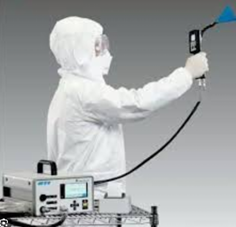
Filter validation
The filter leakage test (filter leak testing) is a critical technique in the validation and maintenance of clean roomsespecially in environments where air purity is essential, such as in the pharmaceutical industry, hospitals, biosafety laboratories and semiconductor manufacturing.
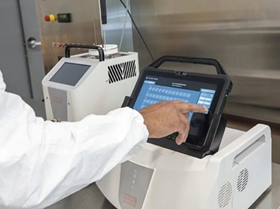
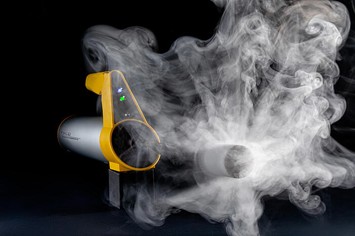
More information about Peroxide measurement
The most common applications in the pharmaceutical sector are:
- Pharmaceutical and biotechnology industry
- Decontamination of clean rooms and critical areas.
- Sterilization of isolators and laminar flow cabinets.
- Preparation of sterile drug manufacturing environments.
- Hospitals and healthcare environments
- Disinfection of operating rooms, isolation rooms and ICU.
- Elimination of resistant pathogens (e.g., Clostridium difficile, MRSA).
- Reduced risk of nosocomial infections.
- Food industry
- Decontamination of production surfaces and equipment.
- Microbiological control in packaging areas.
