Grupo Álava is collaborating on the development of a system to monitor patients with respiratory allergies in an environmental exposure chamber

Grupo Álava and the allergic diseases research team at the [...]
Grupo Álava and the allergic diseases research team at the Ramón University Hospital Health Research Institute (IRYCIS) are developing a system to monitor patients with respiratory allergies in an environmental exposure chamber
Grupo Álava, a leader in technology applied to various industrial sectors, has collaborated with the allergic diseases research team at the Ramón University Hospital Health Research Institute (IRYCIS) on the design, development, and validation of a system for monitoring patients with respiratory allergies, rhinoconjunctivitis, and asthma.
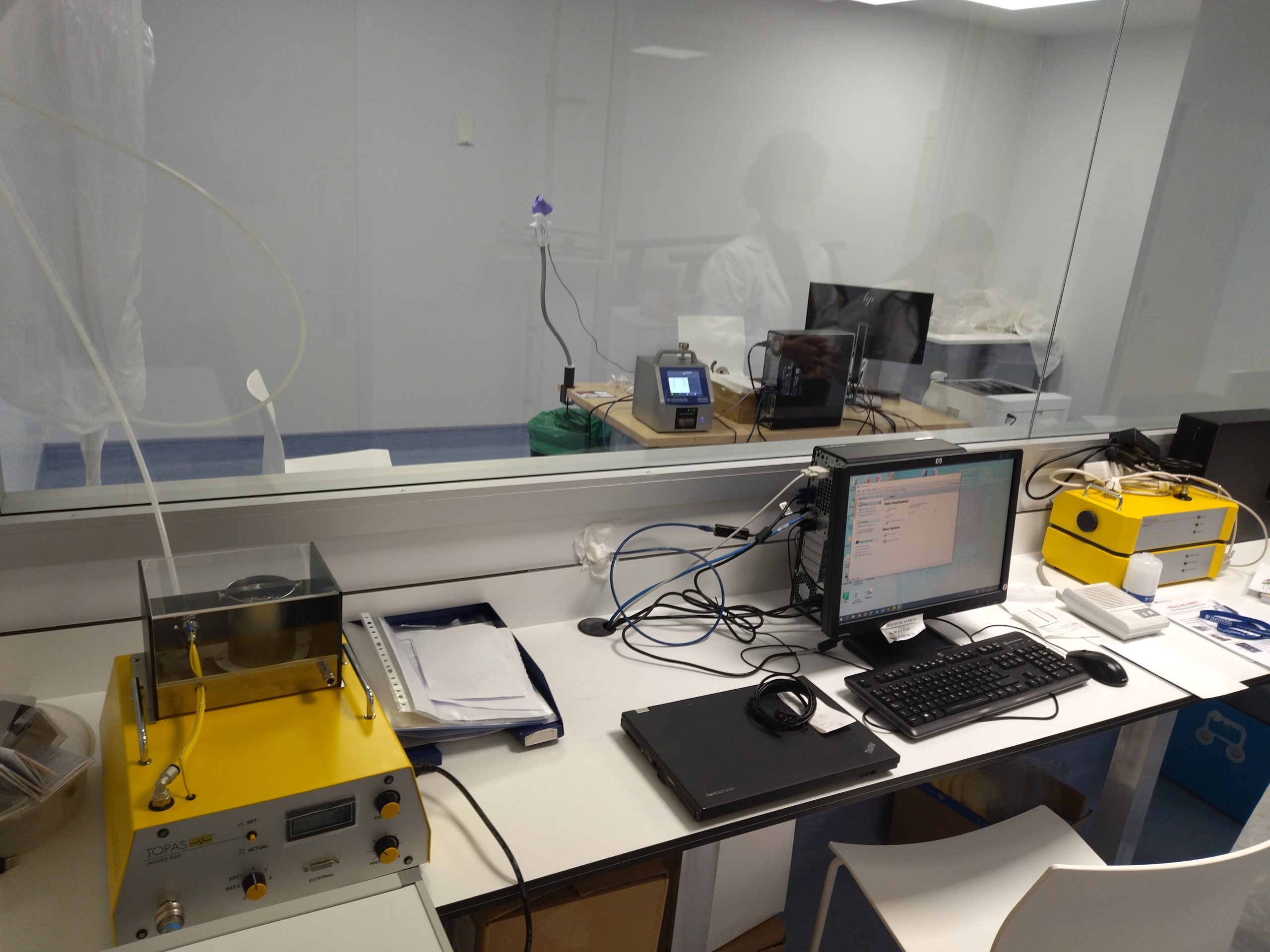
This is a research project that involves the creation of an Environmental Exposure Chamber (EEC) for environmental allergens. This chamber, the only one of its kind in Spain, will help facilitate the diagnosis of asthma and allergic rhinoconjunctivitis. The Álava group supplied the hardware equipment, as well as the control and data acquisition software. Specifically, the TOPAS GMBH® SAG 410 aerosol generator and the Lighthouse SOLAIR Boulder® particle counter, capable of measuring particles ranging from 0.5 to 100 microns. The software, also from Lighthouse, is LMS Express RT, and it is used to monitor the number of macroparticles in real time to maintain a constant concentration in the chamber. The generator is controlled manually, based on what specialists monitor in the LMS Express RT software.
One of the main challenges of the project has been to develop a monitoring system that is reliable and safe for patients, and that allows healthcare professionals to easily access the collected data. The project was developed with the support of the IRYCIS Data Science unit and students pursuing bachelor’s degrees in Biomedical Engineering at Rey Juan Carlos University and the Polytechnic University of Madrid, as well as students in the Master’s program in Machine Learning for Health at Carlos III University.
During each test, the patient completes various questionnaires regarding allergy symptoms, which will facilitate the assessment of their condition during symptom provocation through controlled exposure to allergens. During each exposure, nasal, ocular, and asthma symptoms are recorded and evaluated according to the criteria for a positive result when the patient reports them. After discharge, the patient will fill out forms periodically, similar to what they did in the hospital.
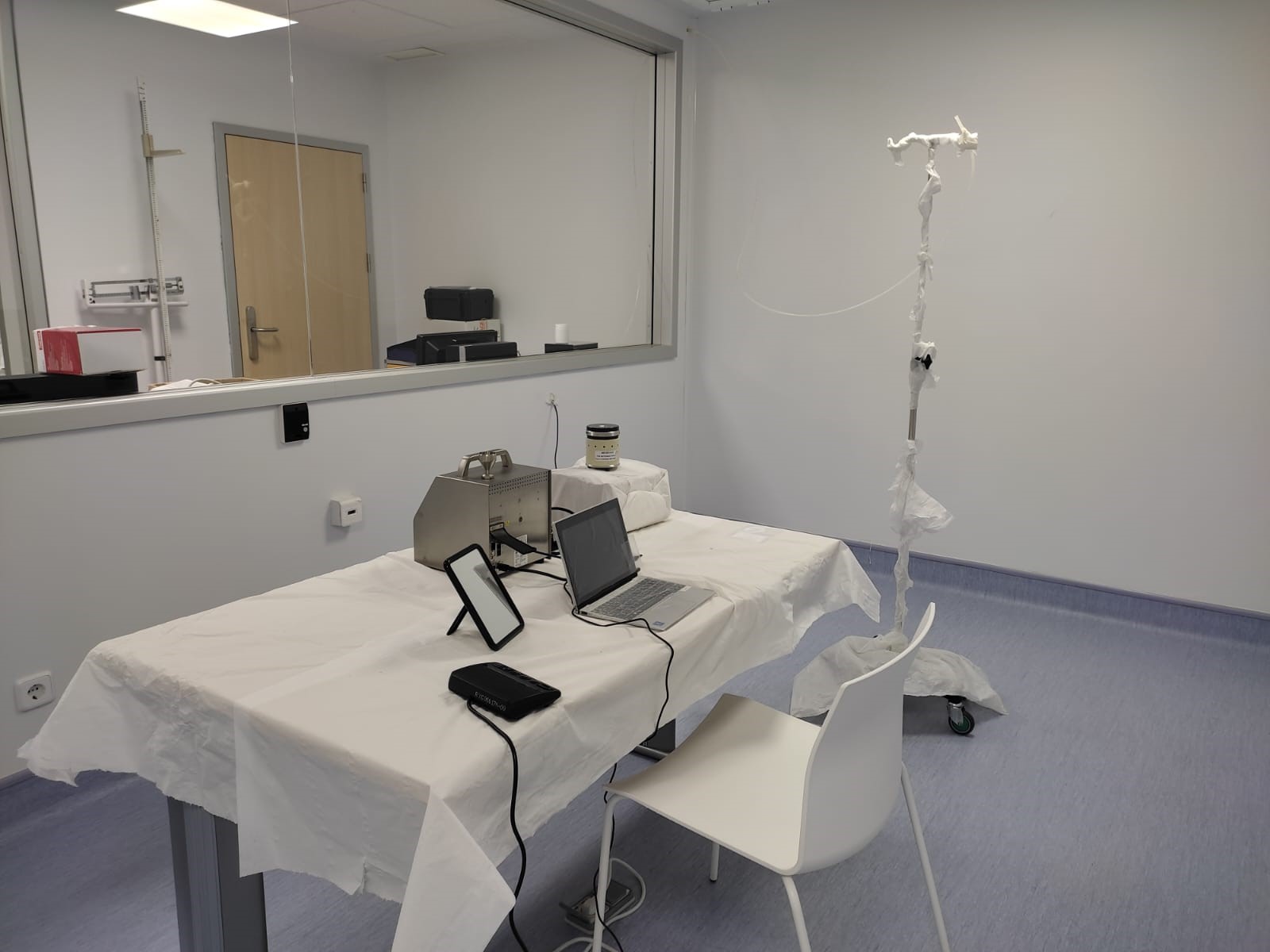
Image from the environmental exposure chamber
The project also included the development of a dashboard that improves the visualization of information, providing a summary of the data and alerts needed to monitor patient exposure.
Dr. Belén de la Hoz Caballer, head of the Allergy Department at Ramón y Cajal University Hospital and principal investigator of this project, emphasizes that “the environmental exposure chamber will be an essential tool for the accurate diagnosis of respiratory allergic diseases, allowing healthcare professionals to recreate controlled situations of allergen exposure, which facilitates more accurate diagnoses and personalized treatment. This is especially valuable for patients with asthma or allergic rhinoconjunctivitis that are difficult to diagnose, who will now be able to receive a more detailed and accurate evaluation.” She also explains that “with the data collection systems we’ve developed, we can now analyze data more efficiently, which will open new doors for clinical research. This will also allow us to offer individualized treatments and monitor each patient’s progress more precisely in real time.”
Juan Rueda, vice president of business development at Grupo Álava, highlighted the importance of this system for diagnosing patients with respiratory allergies to pollen from various plants and trees, since “it provides specialists with a reliable system for exposing patients to the substance that triggers their respiratory allergy in a controlled environment, and it also allows them to collect data on the patients’ condition—not only at the time of exposure and immediately afterward, but also in the hours following exposure.”
.
Image from the environmental exposure chamber