

Portable NIR analyzer to detect adulteration in raw
materials and measure quality parameters
- Identification of different oil varieties and their origin.
- Detection and quantification of adulteration in raw materials.
- Measurement of key quality parameters, such as acidity.
- Monitoring oil quality during frying processes.
- Accurate measurements even through packaging.
- Portable device for use in the warehouse or outdoors.
- Very easy to use, with an intuitive user interface and touchscreen.
Nowadays, the physico-chemical and organoleptic quality parameters of edible oils are analyzed in accordance with the official methods established in European legislation. These procedures are manual, time-consuming, and cannot be applied in-line. By contrast, NIR spectroscopy is highly sensitive to the characteristics of edible oils.
It should also be noted that this new method offers significant advantages: it is a fast, non-destructive, and simple routine that can be implemented in-line to automate process control and quality control.
In addition, this technology can be used in other applications, such as “Adulteration-free cocoa”.
Case study – Europastry
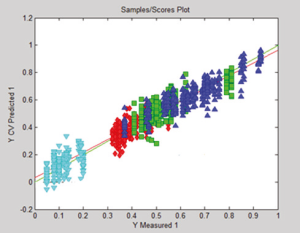
For the oil quality control process, 110 vegetable oil samples from different industrial frying processes were analyzed, acquiring their spectra with VISUM PALM. Acidity values were analyzed according to traditional methods and expressed as a percentage of oleic acid as the reference value.
A chemometric model was developed to correlate the samples’ spectra with the acidity index. This model was able to successfully predict the acidity index of a new set of oil samples with an accuracy of ±0.05% oleic acid, whereas the accuracy of the laboratory analysis method was ±0.08.
According to Marina Diana of Europastry, S.A., “Having such a versatile tool as the VisumPalm spectroscopic analyzer at Europastry represents a revolution in the means of keeping quality processes under control. In our case, it provides reliable and, above all, fast and cost-effective information on total acidity and the content of polar compounds in the frying oil on the production line, making it possible to make the most of that oil while always staying within the high quality standards we set for ourselves.
In turn, it enables us to obtain very useful data such as the available moisture/fat percentages in the product once fried. By saving us labor-intensive laboratory tasks, it allows staff to focus on higher value-added activities, making the return on investment clear. Our idea is to extend its use to the control of foreign bodies that are difficult to characterize and identify in doughs and raw materials, since VisumPalm is an open system in terms of the number and nature of the parameters it can characterize.”
