


Description
Wireless infrastructure systems are essential for monitoring and managing bridges, tunnels, buildings and dams. These systems provide real-time data on vibrations, stresses and other critical structural factors without the need for costly cabling.
Among the benefits of these systems arerapid installation, continuous monitoring and adaptability to remote environments. Their application improves structural safety, optimizes predictive maintenance, and reduces costs, offering a scalable solution for large infrastructures.
Wireless systems have transformed the way companies manage the remote monitoring and control of their operations. These systems enable wireless data transmission, which improves efficiency, reduces installation costs and offers greater flexibility for deployment in a variety of industries. With a focus on ease of use and reliability, wireless systems are an ideal choice for optimizing SHM projects in areas such as bridges, civil infrastructure, geotechnical and building.
A wireless system is a technology that allows the transmission of information between devices without the need for physical connections using LoraWan technology. Wireless systems are used for remote monitoring of infrastructures and real-time control of operations, without the limitations of traditional wired systems.
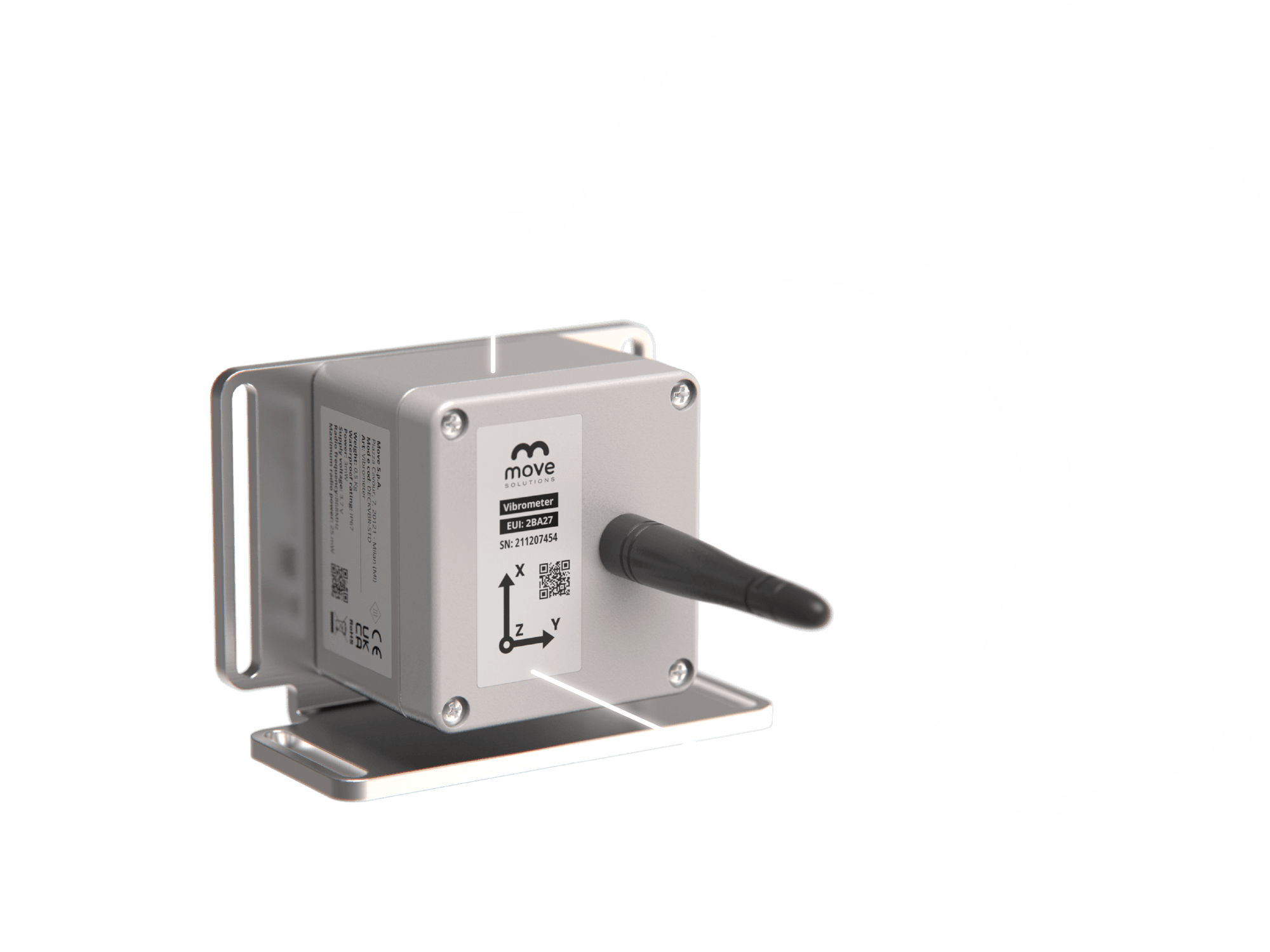
Move Solutions wireless solutions
Move Solutions, our technology partner for wireless infrastructure monitoring, offers a wide range of solutions designed to meet monitoring and control needs in different sectors. MOVE’s systems are characterized by high reliability and low power consumption, making them an efficient and sustainable option for various industrial and commercial applications. Thanks to MOVE’s technology, companies can deploy monitoring and control systems without the need for costly cabling installations, allowing for greater flexibility and scalability.
Benefits of wireless systems
- Cost reductionThe elimination of cables significantly reduces installation and maintenance costs.
- Installation flexibilityWireless devices can be installed in hard-to-reach areas where cables would be costly or unfeasible.
- Real-time monitoringAllows continuous monitoring of equipment and infrastructure, providing real-time data to improve decision making.
- ScalabilityWireless systems can be easily expanded by adding new devices without major changes to the existing infrastructure.
- Mobility: They facilitate remote management of operations, allowing users to control devices and systems from anywhere.
- ImmediacyThe system offers a web-based data visualization platform that allows immediate viewing of data from the second 0 of monitoring.
- Interpretability: The platform has automatic implemented algorithm that makes available to infrastructure manager validation parameters of the state of the structure without the need of an expert “eye”.
The MOVE wireless systems that we supply from Álava Ingenieros represent an advanced technological solution that improves operational efficiency and offers real-time monitoring, adaptable to various industries and applications, optimizing resources and reducing costs.
Other products you may be interested in
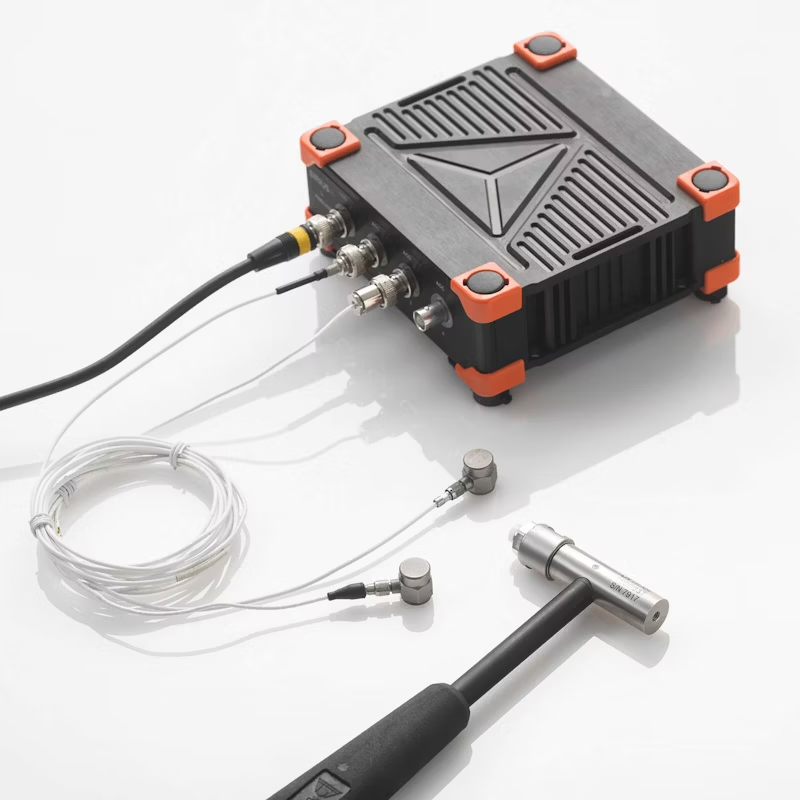
Modal analysis, bridges and viaducts
Operational modal analysis (OMA) is a non-invasive technique used for monitoring bridges in operation. Based on the natural vibrations of the structure, OMA allows the identification of natural frequencies, vibration modes and damping factors without interrupting traffic.
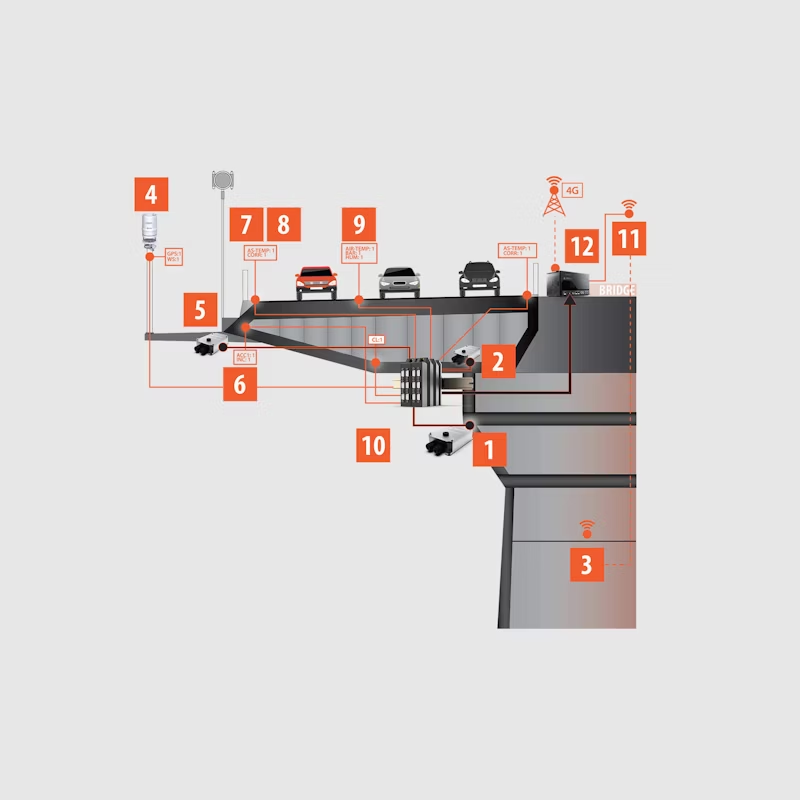
More information about Static and dynamic wireless monitoring
Applications of wireless systems
- Infrastructure monitoring: Perfect for monitoring tunnels, historic buildings, dams and geotechnical sites by detecting changes in real time that could indicate potential problems.
- During construction it is important to secure all adjacent structures during construction work. For this purpose, stresses, vibrations, inlcination, thrusts, water levels, etc. are monitored.
- Railroad: The railroad is a unique infrastructure in which ensuring the correct condition of the track and nearby elements is vital for its safety. For this purpose, the move system is perfectly adapted to obtain directly values such as track settlement, warpage, etc. In addition to the more generic parameters.
- Bridges and viaducts: Perfect for monitoring bridges thanks to its triaxial accelerometry sensors and dynamic measurement of vertical displacement. In addition, the software provides an algorithm-based tool for the automatic analysis of dynamic behavior.
