


Description
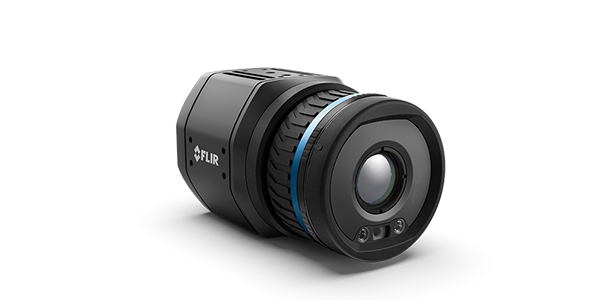
As your technological partner with 50 years of experience, at Álava Ingenieros we put FLIR solutions within your reach. We provide the tools to transform heat into quantifiable data and take your research to a new level of excellence.
While conventional thermal imaging cameras are perfect for predictive maintenance, scientific applications demand a higher level of accuracy and versatility. FLIR’s R&D cameras are designed for this: they not only “see” heat, but measure and quantify it with exceptional radiometric accuracy.
This provides reliable and repeatable data, essential for validating theories, optimizing designs and understanding complex processes.
At Álava Ingenieros, we integrate FLIR technology to offer solutions to the most demanding challenges of the scientific community.
Discover our full range of thermal imaging cameras on our dedicated website: termografia.es
Machine Vision Thermography Applications
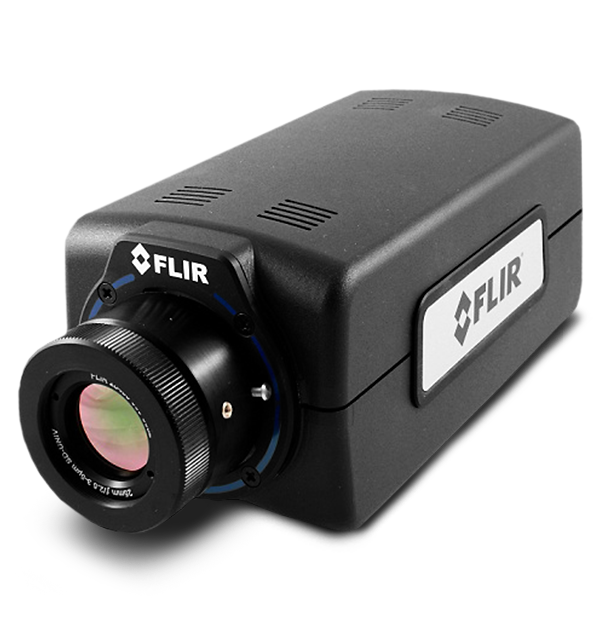
At Álava Ingenieros, we integrate FLIR technology to offer solutions to the most demanding challenges of the community.
- Prototype validation and product design: Analyze the thermal behavior of electronic components, motors or new materials under stress. Identify hot spots and inefficient heat dissipation to accelerate innovation and drastically reduce your development costs.
- Optical Gas Imaging (OGI): Visualizes and quantifies leaks of greenhouse gases (methane, CO₂) and hundreds of volatile organic compounds (VOCs). It will become an indispensable tool for your environmental research and the development of safer and cleaner technologies….
-
Weld inspection: Analyzes heat distribution right after welding (laser, spot, etc.) to ensure a perfect joint and detect micro-cracks or cold spots that indicate failure.
- Early fire detection: A thermal vision system can detect a hot spot before smoke or flames are generated. It is the fastest solution for protecting warehouses, hangars or industrial buildings, triggering an alarm instantly.
- Conveyor belt monitoring: Detects overheating in rollers or motors due to excessive friction, preventing breakdowns and fire hazards in environments such as mining or logistics.
- Furnace and boiler control: Monitors the external surface of industrial furnaces. AI can detect the appearance of a hot spot indicating a failure of the internal refractory lining, preventing unplanned and dangerous shutdowns.
- Printed circuit board (PCB) inspection: When feeding a board, the algorithms can instantly detect short circuits, faulty components or bad solder joints that manifest themselves as anomalous hot spots.
- Thermosealing of containers: Ensures that the sealing of blisters, food trays or any plastic container is hermetic and uniform, verifying that the sealing temperature has been correct over the entire surface.
- Plastic injection molding: Verify that parts cool evenly as they exit the mold. Poor heat distribution indicates internal stresses that will cause warping later.
Contact our specialists for a demonstration or to discuss your application requirements. Find out how FLIR’s thermal machine vision can unlock the secrets to your next big project.
Other products you may be interested in
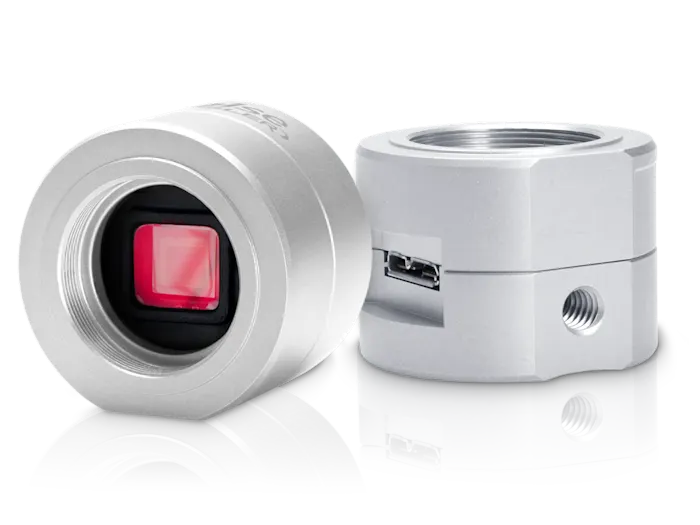
Basler ace
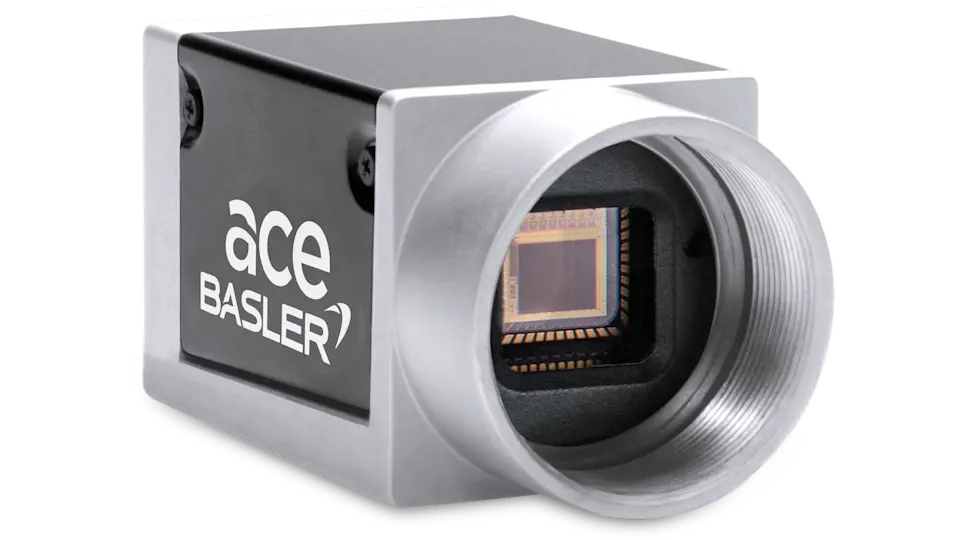
The BASLER ACE series offers models with resolutions from VGA to 20Mpixels with capture rates up to 751 fps with new CMOS, CCD and NIR sensor technology. Available with GigE Vision, USB3 Vision and Camera Link interfaces.
Basler ace L
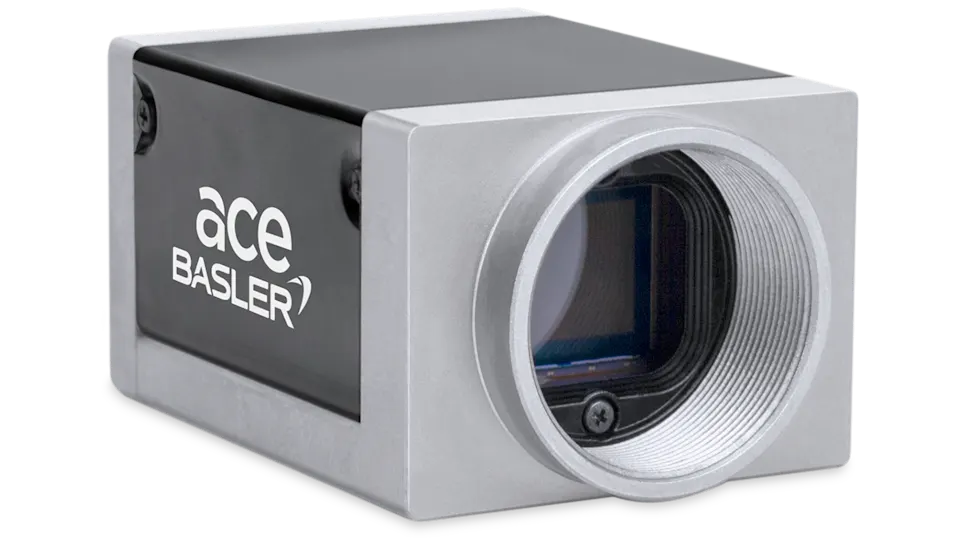
The product line Basler ace L product line offers processing cameras that feature high resolution and high image quality.
More information about Thermography for Machine Vision
Process improvement and greater innovation
Innovation, the search for process improvements, new products or designs are a constant pressure in today’s industry. We seek production and designs that are more efficient, safer and less costly.
Thermal imaging cameras will help us to improve our processes and components, get them to achieve their maximum productivity without compromising their own performance or that of the rest of the equipment and, of course, without compromising the safety of end users and researchers.
Widely used in the field of research and quality control, thermographic cameras are used in applications such as: extending the service life of a part, studying the properties of a component (rigidity, flexibility, conductivity, etc.), increasing the working cycles of the different actors in a chain, improving the quality of finishes and many others.
Temperature measurement with IR cameras:
Thermography is a technique that uses infrared (IR) radiation to visualize and measure the temperatures of objects or surfaces without the need for physical contact. This method is widely used in a variety of industries, from engineering and construction to medicine and security, due to its ability to detect thermal variations that may indicate problems or abnormalities.
How do thermal imaging cameras work?
Thermal imaging cameras are devices that capture the infrared radiation emitted by objects and convert it into a thermal image.
- Infrared (IR) radiation detection: All objects with temperature emit infrared radiation, which is totally invisible to the human eye. The amount of radiation emitted increases with the temperature of the object.
- Infrared Sensor: Thermal imaging cameras are equipped with infrared sensors that detect this radiation. The sensors are responsible for converting the radiation into electrical signals.
Signal processing: The electrical signals generated are processed to create a thermal image. This image shows different colors or tones corresponding to different temperatures. In thermal imaging, warm colors (such as red and yellow) indicate higher temperatures, while cool colors (blue and green) indicate lower temperatures. - Image interpretation: The use of these tools (thermal imaging cameras) results in one (or more) images. Technicians and engineers can interpret these images to identify anomalous thermal patterns, evaluate conditions and make informed decisions.
Other applications
- New materials: Evaluation of thermal properties of new materials and composites in advanced materials research.
- Electronics testing: Heat dissipation monitoring and hot spot detection in electronic prototypes and integrated circuits.
- Energy systems optimization: Thermal evaluation of renewable energy systems such as solar panels and wind turbines to improve their efficiency.
- Building technology research: Analysis of the thermal performance of new insulation systems and building structures to improve energy efficiency.
- Medical equipment development: Thermal testing in the design of medical devices, such as sensors and diagnostic imaging equipment.
- Robotics and automation testing: Evaluation of the thermal behavior of robots and automated systems to ensure their reliability and safety.
- Aeronautics research: Thermal monitoring of aerospace components and aircraft to study thermal impact during flight tests.
- Development of cooling technologies: Evaluation and improvement of cooling solutions for electronic devices and industrial systems.
- Chemical process evaluation: Thermal monitoring in chemical synthesis experiments to control reactions and improve process efficiency.
Benefits
The use of thermal imaging cameras in research and development (R&D) offers numerous benefits that boost efficiency and accuracy in the creation of new technologies.
These cameras enable fast and accurate evaluation of thermal distribution in prototypes and systems, facilitating the identification of problems such as hot spots and heat leaks. This not only optimizes design and improves product reliability, but also speeds up the development process by enabling early adjustments and corrections. In addition, thermal imaging cameras are essential for the development of new materials by analyzing their thermal properties, contributing to the creation of more efficient and advanced composites.
