Nanolubrication: From Laboratory Innovation to Plant Performance

In mechanical engineering, friction and wear are the silent enemies that shorten the service life of machinery and drive up maintenance costs. What if friction could be controlled directly at the nanoscale by modifying the behavior of surfaces in contact?
Nanolubrication is no longer a futuristic concept but has become an established technology that is pushing the boundaries of efficiency and durability in sectors such as the automotive industry, wind energy, and precision manufacturing.
What exactly is nanolubrication?
Nanolubrication involves incorporating nanoscale additives (smaller than 100 nanometers) into base oils and greases. Unlike conventional additives, these nanoparticles—such as graphene, metal oxides, or molybdenum disulfide—not only mix with the lubricant but also interact directly with metal surfaces. They act like millions of microscopic bearings that fill in cracks and create an incredibly strong protective film, transforming sliding friction into much more efficient rolling friction.
Direct Benefits for Industrial Maintenance
The use of nanolubricants results in measurable and direct benefits for any industrial operation:
- Drastic reduction in wear: By minimizing metal-to-metal contact, the service life of critical components such as bearings, gears, and hydraulic systems is significantly extended.
- Improved energy efficiency: Less friction means less energy is needed to move the components, which optimizes fuel consumption and reduces emissions.
- Greater durability under extreme conditions: Nanolubricants remain stable at high temperatures and pressures, where traditional lubricants degrade.
- Reduced operating costs: Extending oil change intervals and reducing unplanned downtime due to mechanical failures result in substantial long-term savings.
Real-World Validation of Nanolubrication Using Tribology
One of the key questions surrounding nanolubrication is: How much do nano-additives actually improve performance compared to conventional formulations?
The answer lies not in theory, but in measurable and reproducible tribology.
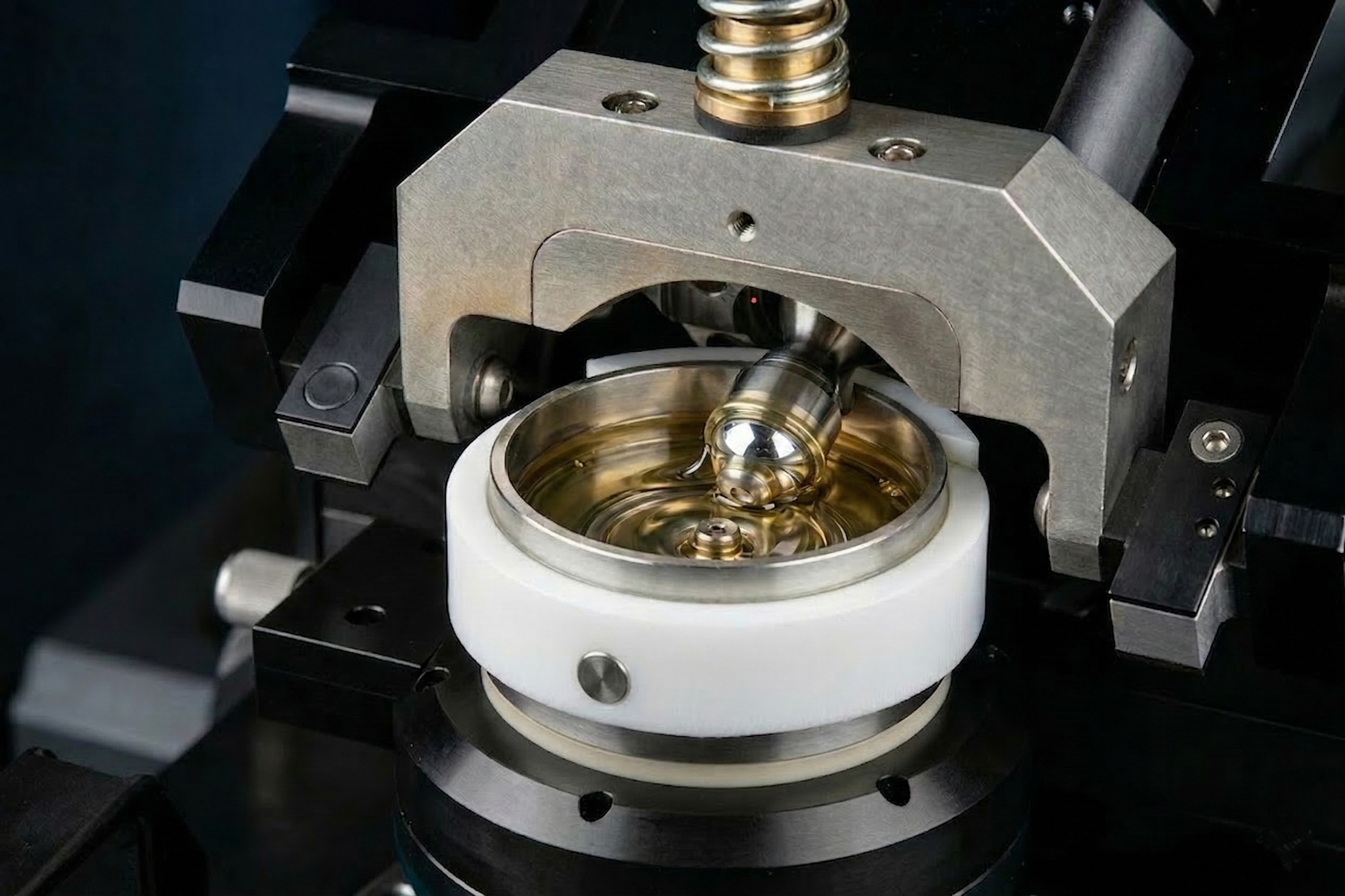
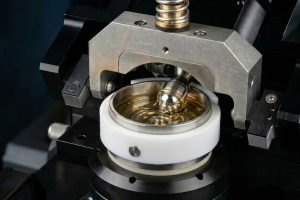
The MTM (Mini Traction Machine) tribological technique allows for the precise evaluation of the behavior of lubricants—including nanolubricants—under real-world lubrication conditions. Unlike other simplified tests, the MTM replicates conditions similar to those found in actual industrial components such as gears, bearings, or rolling contacts.
MTM tests consistently show that nanolubricants offer clearly measurable performance improvements, including:
- ✔️ Reduced friction under extreme conditions, where conventional lubricants often fail.
- ✔️ Stronger and more stable lubricating films, even under high loads and at varying speeds.
- ✔️ Better performance across the entire range of lubrication conditions, from cold starts to continuous operation.
These results are neither estimates nor promises: they are reproducible data, obtained under controlled protocols, that allow for a direct correlation between the advanced formulation and actual performance in service.
Thanks to the MTM technique, it is possible to close the loop between nanotechnology, tribological characterization, and industrial application, providing manufacturers and end users with the confidence needed to adopt nanolubrication as a validated, non-experimental technical solution.
mmmmm
nfhnhn
Today, nanolubrication represents a real and tangible advancement in how friction and wear are addressed in industry. Thanks to the incorporation of nano-additives, it is possible to significantly improve energy efficiency, extend the service life of components, and reduce costs associated with maintenance and unplanned downtime.
The incorporation of nano-additives allows for direct action at the surface level, but their true value lies in the fact that, thanks to advanced tribological characterization, their impact can be measured, validated, and quantified to enable data-driven decision-making rather than decisions based on assumptions
At Grupo Álava, we help the industry evaluate, validate, and implement nanolubrication technologies using advanced techniques such as MTM, linking lubricant formulation to its performance under real operating conditions.
Would you like to know how nanolubrication can improve the reliability and maintenance costs of your assets?
👉 Contact our experts and take the next step toward more efficient, data-driven industrial maintenance.