Specialized Article
LiDAR and Its Use in Railway Infrastructure

Why are LiDAR technology and its use in railway infrastructure [...]
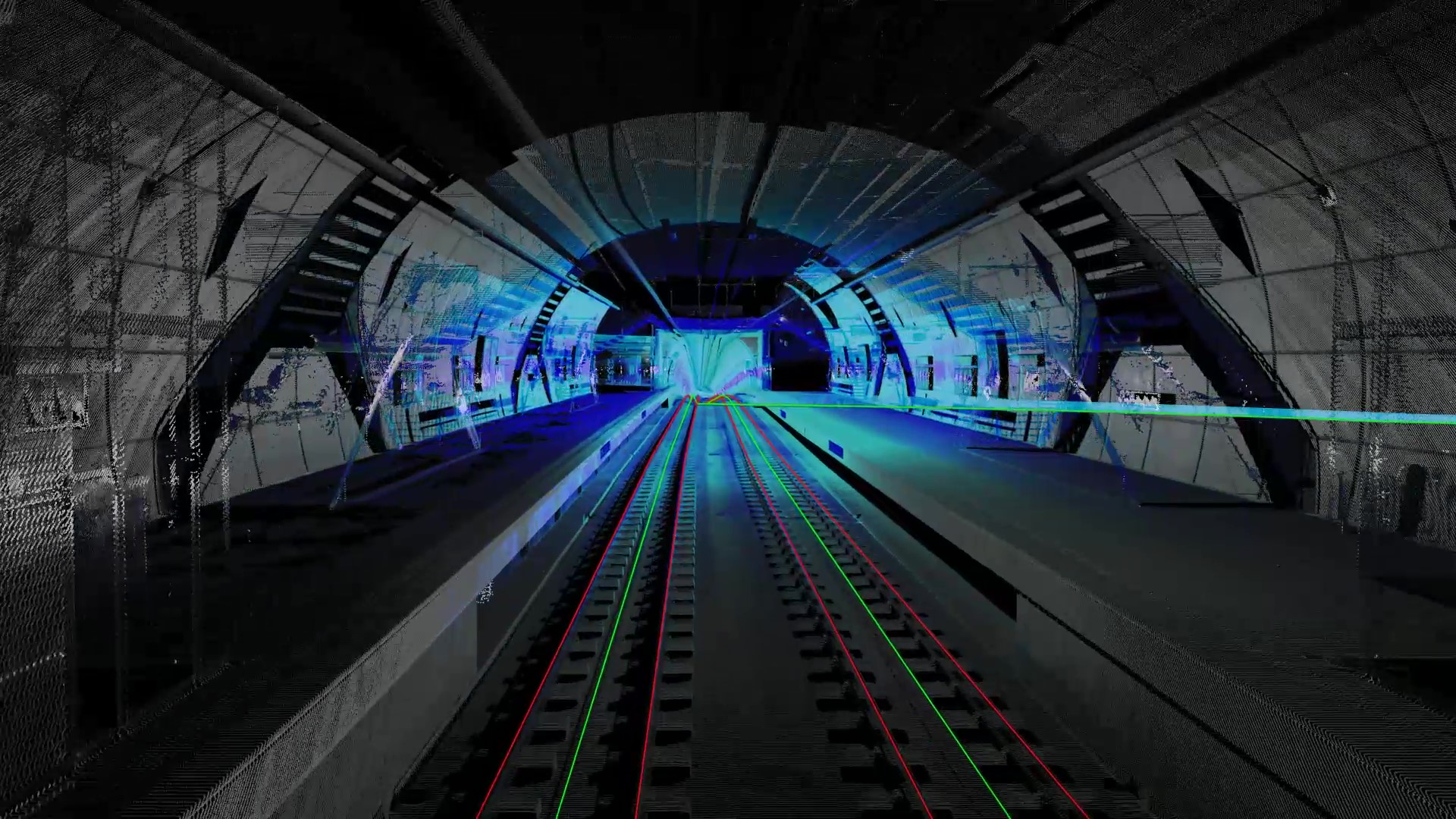
Why are LiDAR technology and its use in railway infrastructure such a success?
LiDAR systems provide a means of mapping the environment with high precision. One of the main uses of LiDAR technology in civil engineering is the mapping of transportation infrastructure. However, there are many other applications, such as road surface measurements, city modeling, rapid surveying of bulk material storage areas, topographic surveying, GIS mapping, and asset management.
In this article, we will focus solely on the application of LiDAR technology in transportation infrastructure to obtain georeferenced 3D point clouds that allow us to inspect these structures in order to determine their current condition and identify any potential changes.
Depending on the type of infrastructure and the measurements to be taken, there are two operating modes: static and dynamic. When deploying a LiDAR sensor in dynamic mode, it is essential to integrate it into a motorized platform, such as a car, a train, or an airplane.
WHAT KIND OF INFORMATION MIGHT I FIND USEFUL IN A GEOREFERENCED POINT CLOUD?
All the information captured by the point cloud can be used to extract geometric data such as superelevation, alignments, clearance interferences, clearances, stakeouts, etc. Another data point that is collected is the density of the area. This data is useful for constructing underpasses beneath waterways or roads.
HOW DOES GRUPO ÁLAVA SUPPORT THE RAILWAY SECTOR?
We offer a wide range of solutions for infrastructure digitization and have a team of experts in 3D digitization, BIM modeling, digital twins, and predictive maintenance of structures . Learn more about us.
LiDAR: THE PATH TOWARD THE DIGITALIZATION OF INFRASTRUCTURE

Categories
Knowledge Digitization of infrastructures Civil engineering and construction Transportation and Traffic