News
NGEU European Funds (Digital Cycle)

As top executives from Spanish companies in the energy, industrial, [...]

As top executives from Spanish companies in the energy, industrial, and banking sectors announced a few days ago on “Wake Up Spain”: “European funds represent a tremendous opportunity to transform the Spanish economy and to maintain and create jobs.”
Following this, on Tuesday, April 13, the Prime Minister presented a “Recovery, Transformation, and Housing Plan.” In it, he outlined the main objectives and budget allocations for the use of 140,000 millones de euros in European funds through 2026, viewing the recovery from the coronavirus crisis as an opportunity to modernize and digitize the Spanish economy.
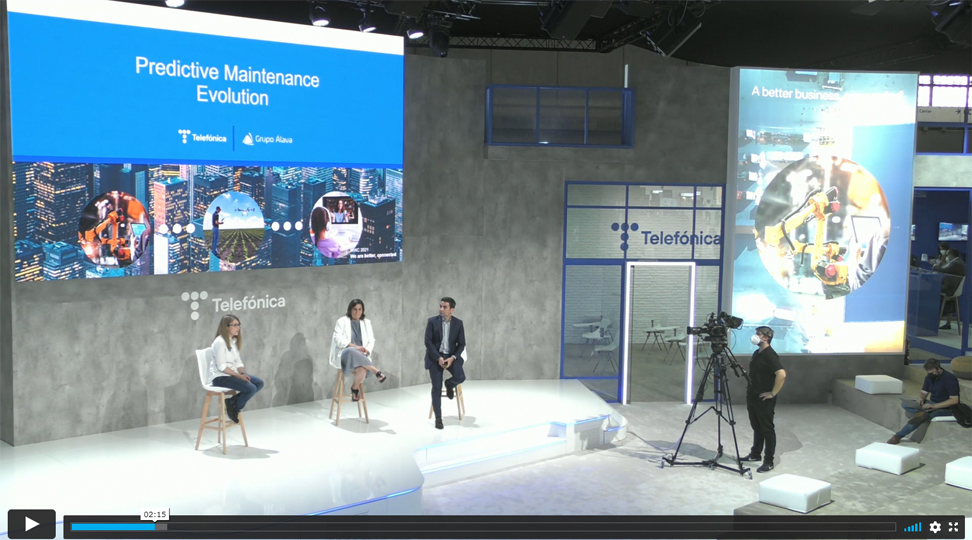
At Grupo Álava, we shared our perspective on these grants during the roundtable discussion titled “NGEU European Funds: The Catalyst for the Digital and Energy Transformation of Our Companies | Ciclos Digitales,” held on May 20. For an hour, we spoke with various professionals, who shared interesting points of view:
- Abel Linares – CEO of Nunkyworld
- José María González – General Manager at APPA
- Antonio Sagardoy – CEO of Bros Group
- Fernando Pérez – Live from Madrid at Zabala
- José Fernández – CEO at MonoM
- Moderator: Juan Antonio Gil
The “Recovery, Transformation, and Resilience Plan” (€140,000 million in public investment through 2026) aims to accelerate the digital transformation of the economy and society by fostering an environment conducive to investment and the growth of businesses. This will increase the productivity and competitiveness of the entire economy through disruptive digital technologies such as artificial intelligence. By promoting a human-centered approach to digitalization, the plan will put people at the center and align with a Charter of Digital Rights agreed upon at the national, European, and global levels.
There will be a strong concentration of investments and reforms in the first phase of the NextGeneration EU plan, which covers the 2021–23 period and has a budget of 70KMill€. The plan calls for allocating 39% of the investment to advancing the green transition and 29% to digital transformation, in line with the Spain Digital 2025 Agenda. The Spanish economy has lacked the capacity to significantly increase productivity and per capita income, as well as the resilience to weather periodic crises. The plan has four cross-cutting pillars for a green, digital, cohesive, and equitable Spain.
These pillars are reflected in 10 key policies that encompass the 30 components underpinning the investment projects and reforms aimed at modernizing the country. The main pillars of reform and investment focus on the integration of renewable energy and smart grids, the development of charging stations, the green hydrogen roadmap, 5G connectivity, the modernization and digitization of public administrations, the promotion of AI through the ENIA (National Artificial Intelligence Strategy), and digital skills.
We highlight the following as the main investment programs for Phase 1: Sustainable Mobility:
- 13KMill€ – SME Digitalization
- 4KMill€ – Digital Skills
- 3.6KMill€ – 5G Roadmap
- 4KMill€ – ENIA
- 500Mill€ – Smart Grid
- 1.4KMill€ – Renewable H2 Roadmap
José María opens the session with a very positive and realistic perspective, noting that these funds are substantial enough to accommodate every business in the sector. The energy sector encompasses a range of highly beneficial activities, and within this context, he explains how and where 40% of the funds will be allocated for this green energy transition: €1.55 billion for green hydrogen, €1.67 billion for self-consumption, and €1.6 billion for smart grids.
Abel discusses the different stages of digital transformation, how it began with the shift in the year 2000, and how companies that joined the second stage of automation were better able to navigate the changes we faced during the COVID-19 pandemic. We are now in the third wave of digital transformation, and a key element of this third stage is artificial intelligence based on data, algorithms, and intelligence. He encourages us to learn more about this technology, since:
- It affects communication models: it puts the customer at the center of the equation
- Visualization models, improvement: quality processes, research, and analysis
- Arithmetic models, mathematical models that help us evolve
Antonio Sagardoy addresses one of today’s major challenges: the digital divide. He notes that companies are aware of the need to undergo digital transformation. He points out that this involves a certain degree of complexity and that change is not easy, but they must assess the talent they already have in-house. Identifying what you have and what talent you need is vital to supporting this transformation process. In addition to making bold decisions, we need to understand what changes are required—from the micro to the macro level—and select the right team. This involves changing habits and behaviors, where technology plays a key role; however, we need individuals who, in addition to possessing high competence, are flexible and curious, so they can support us in our digital transformation.
Fernando Pérez explains when and how the funds will be confirmed, which provides a very interesting perspective for planning our businesses. Compared to previous years, the funding from the European Union has increased tenfold, which will pose a significant management challenge for the public administration. We’ll need to keep an eye out for calls for proposals for both traditional and new grants, public tenders, and public-private partnership projects.
José Fernández shares his perspective on the industrial revolution, which encompasses the technologies relevant to Industry 4.0 and digital transformation. There are many technologies available to us today—big data, artificial intelligence, augmented reality, collaborative robots, and more—and we need to know how to integrate all of these into our business models.
Conclusions: These funds represent a great opportunity to tackle digital transformation. We must be bold when facing new challenges and making decisions that help us grow professionally, while remaining aware of the changes in behavior and habits we need to adopt and learn. The customer must be at the center of the digital transformation system, and these processes must improve our customer experience.