Specialized Article
Digital Twins: Digital Transformation in Industry

WHAT IS A DIGITAL TWIN? To put it simply, a [...]

Not long ago, my colleague Miguel Mateo (Chief Sales Officer at MonoM) was invited by Telefónica Tech to speak at MWC21 ( Mobile World Congress 2021) on Predictive Technology and 5G and how it’s revolutionizing the digitization of industry. Over coffee after his presentation, we both agreed that the immediate future of this new 5G+Predictive technology lies in Digital Twins and their application across many sectors of the economy and industry. Although we both lamented how little these concepts are known, despite how much they can contribute to various industries.
WHAT IS A DIGITAL TWIN?
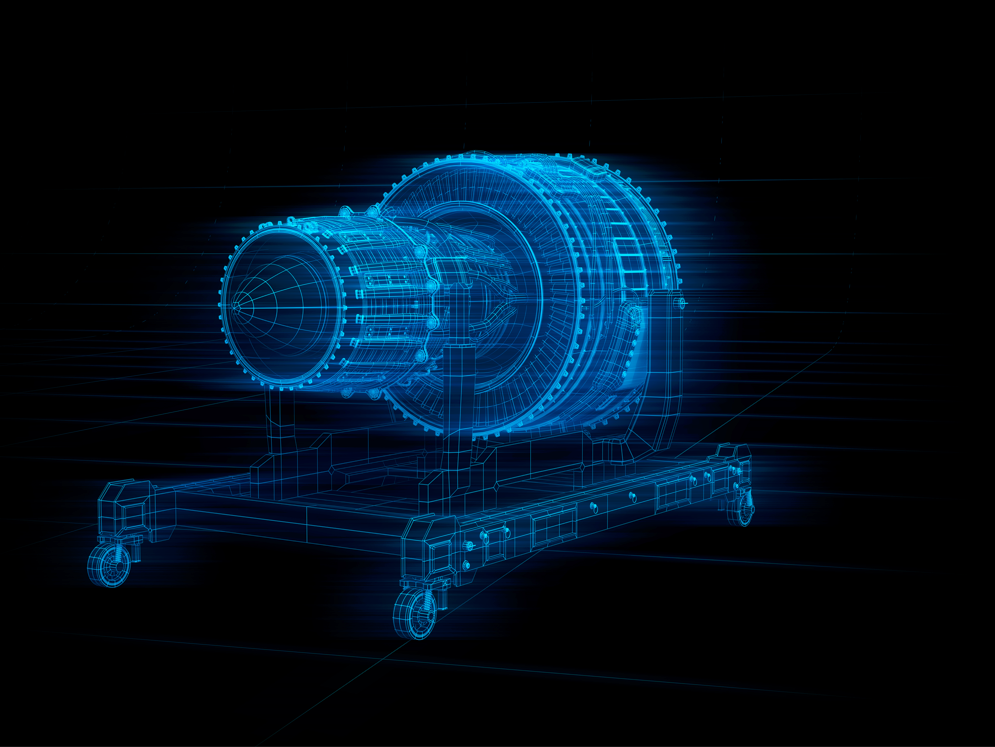
To put it simply, a digital twin has the ability to interpret information captured from the physical world and display it to humans in graphical form, providing them with two main benefits.
If you have any questions about the term “physical world,” let me explain that I’m referring to things like the motors on a factory assembly line or those on a drawbridge, the entire network of pipes on a warship, or the rotor of a wind turbine, to name a few examples.
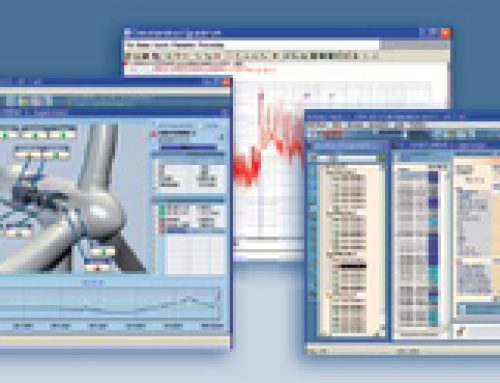
First, a digital twin provides not only a digital representation of the infrastructure and/or asset it represents, but also the ability to monitor, in real time, the status of the infrastructure, clearly and simply displaying important and critical information about all assets, while also enabling you to make decisions by activating internal processes, triggering alarms, and taking other actions based on the information gathered through machine learning algorithms.
DIGITAL TWIN: KEY TO DECISION-MAKING AND COST SAVINGS
A second benefit is the ability to create scenarios, so that users can analyze them and make decisions based on them.
You can imagine the benefits that come to a factory operations manager from being able to build performance scenarios and predict failures on their assembly lines, right?
Or, even better, how effectively the annual investment in the maintenance of national infrastructure can be managed if engineers can use its digital twin to view the current condition of roads, tunnels, bridges, railways, and ports, and predict when any of them might experience problems, depending on the scenarios being studied.
These examples are just a few. Now think of other sectors and industries that need to monitor the condition of their infrastructure or assets and optimize them to improve performance, productivity, and competitiveness.
According to Research Dive, the estimated growth rate for the adoption of digital twins over the next 5 years is 41.5%.

HOW A DIGITAL TWIN WORKS
Please note that there are a number of technologies that support digital twins, including 5G technology, IIoT(Industrial Internet of Things) platforms, and predictive technology.
First and foremost, a digital twin monitors the assets and/or infrastructure for which a digital asset is required, using various types of sensors (pressure, vibration, temperature, oil, noise, … or others).
The sensors collect real-timereal time and send it (using wireless technology or edge computing) to an IIoT cloud platform. It is essential to have the best possible communications. That is why 5G, since its inception, has become essential to the existence of digital twins and the benefits they provide.
Once the information reaches the IIoT platform, it is interpreted, analyzed, and compared with other databases. To do this , it is necessary to have an IIoT platform with Big Data capabilities, and Predictive machine learning algorithms based on the expertise of predictive analysts and data scientists that meet the user’s needs.
Finally, digital twins provide a graphical representation of assets and link them to AI (Artificial Intelligence) processes for decision-making and/or scenario generation.
DO I NEED A DIGITAL TWIN?
How can you decide whether a digital twin in your organization is beneficial or not? Perhaps these questions will help you reflect on the matter and come up with an answer:
- Does creating business scenarios help you improve your strategies?
- Does predicting what assets to hold and when help you invest more effectively?
- Does having access to all the information related to your asset—regardless of the source—benefit you?
- How long do you think it will take your competitor to implement this technology?
- Is there another effective strategy for digitizing my infrastructure?
- Are there any experts who can help me?
Digital twins are here to stay, just like cell phones, the Internet, airplanes, and computers.

ANTONIO RAMIREZ CAÑAS
Chief Marketing Officer at Grupo Álava