Specialized Article
Infrared Technology for Quality Control

We are referring to online, real-time monitoring and control systems [...]

Infrared Technology for Quality Control

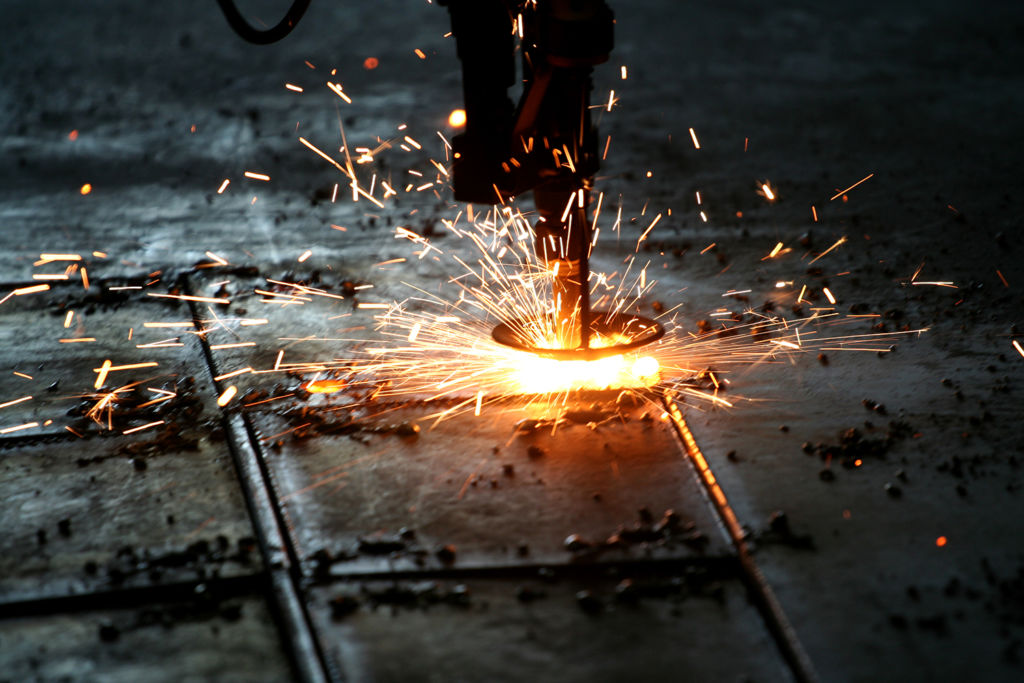
One of the industry’s main principles is process optimization, with the goal of ensuring increased productivity by making operations more cost-effective and efficient. It is essential to prevent failures in the production chain and to ensure consistent manufacturing in order to avoid increased costs and a loss of efficiency. Recognizing this, Grupo Álava recently signed a partnership with New Infrared Technologies (NIT), a Spanish manufacturer of broadband IR detectors specializing in innovative solutions for industry. Together, they offer the market solutions based on infrared technology for quality control in certain industrial processes, where techniques such as L-DED, laser welding, and WAAM are applied.
We are referring to online, real-time monitoring and control systems based on infrared imaging that can be applied to various industrial sectors—such as the automotive, energy, aerospace, and process industries—in applications such as the reinforcement, restoration, and repair of components and structures through the application of protective coatings, or the 3D additive manufacturing of metal parts and structures. Capable of collecting the smart data needed for decision-making, these systems will help companies optimize and digitize their processes.
“CLAMIR is an online, real-time process control system that improves quality and ensures repeatable production of parts manufactured using LMD and cladding processes. It measures and maintains the geometry of the melt pool through real-time, closed-loop control of the laser power and by using a high-speed MWIR (1–5 µm) infrared camera.” — Marta Bravo ( Product Manager for Imaging and Photonics at Grupo Álava).
As part of its industrial development strategy and driven by the major technological advances of recent years, another key focus of the industry is development, innovation, and retrofitting. Thus, this agreement also benefits universities and technology centers in their R&D projects aimed at developing and improving laser-based production processes, incorporating new materials processing technologies, or enhancing the properties of materials of industrial interest. – Cristina González (Head of Imaging and Nanotechnology Business).
In addition, there is the potential to transition to Industry 4.0 by connecting these systems to a smart, multidisciplinary IIoT platform—one that is AI-based and capable of integrating all data into a single interface. This will greatly assist in real-time production control.
SHALL WE TALK?