Vibration analysis

Vibration analysis is the primary technique for monitoring and diagnosing [...]

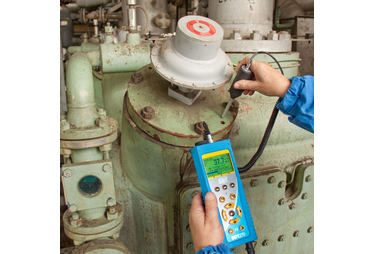
Vibration analysis is the primary technique for monitoring and diagnosing rotating machinery and implementing a predictive maintenance plan.
Vibration analysis has been used effectively for more than 30 years to monitor and diagnose mechanical failures in rotating machinery. Initially, analog equipment was used to measure broadband vibration, which made it impossible to reliably diagnose failures in bearings and gears.
Later, tunable filters were incorporated into the analog electronics, which greatly increased diagnostic capabilities, but without the ability to process large amounts of data. Starting in 1984, digital equipment with real-time FFT and storage capabilities (analyzers/data loggers) began to be used, along with software-based processing on PCs.
Nowadays, no one doubts the effectiveness of vibration analysis in rotating machinery, which even allows for the diagnosis of certain problems in electrical machines.
The information that a comprehensive vibration analysis can provide in the form of monitoring parameters and diagnostic graphs includes:
Monitoring Parameters:
- Broadband measurement of overall or total vibration.
- Vibration measurement in a narrow frequency band.
- Measurement of specific vibration parameters for fault detection in bearings and gears (demodulation, envelope, Spike Energy, PeakVue, etc.).
- Waveform Parameters: Symmetry (Kurtosis) and Peak (Skewness).
- Vibration phase in harmonics: 1x, 2x, 3x, … RPM.
- Synchronous peak vibration measurement: 1x, 2x, 3x, … RPM.
- Sub-synchronous vibration measurement.
- Non-synchronous vibration measurement.
Diagnostic Charts:
- Waveform
- Frequency Spectrum.
- Peak-Phase Diagrams: Bode, Nyquist, Polar, …
- X-Y orbits of channels crossed at 90°
Detectable faults
By applying vibration analysis to rotating machinery, it is possible to accurately diagnose problems related to:
- Imbalance
- Misalignment
- Clearances
- Friction
- Bent axles
- Eccentric pulleys
- Bearings
- Gears
- Electrical Faults
- …
Critical machinery that can be monitored
The critical machinery that can be monitored in industrial plants is as follows:
- Steam and Gas Turbines
- Centrifugal Pumps
- Fans
- Electric motors
- Rotary, screw, and reciprocating compressors
- Agitators, mixers…
- Mills and Rotary Kilns
- Centrifugal Gear Reducers
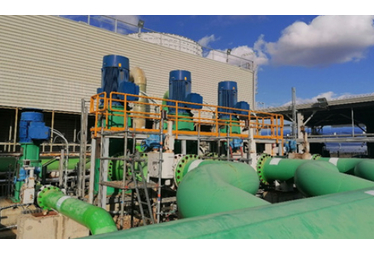
- Cooling towers
- Diesel engines and generators for power generation equipment …
More about machinery monitoring.
Find more information about machinery monitoring by industry sector or by monitored machine.
Selecting Vibration Sensors: Please fill out this questionnaire to help us select the most suitable sensors for your application.
Selecting Vibrometers, Vibration Sensors, and Vibration Analyzers: Using the form below, we will help you select the vibrometer, vibration sensor, or vibration analyzer that best suits your needs.
Useful links:
- Vibration Analyst Certification Courses I, II, and III
- Vibration data loggers for predictive maintenance
- Vibration transmitters
- Predictive Maintenance (PdM) or Condition-Based Maintenance (CBM)
Contact one of our engineers specializing in predictive maintenance for advice on how to implement predictive maintenance using vibration analysis: info@preditec.com