
Motion Amplification
RDI Technologies' Motion Amplification® technology makes it possible to visualize and measure movements, vibrations and displacements imperceptible to the human eye, turning each pixel of a camera into a high-precision sensor. It uses patented video processing algorithms to amplify these movements in real time, facilitating fault diagnosis, identification of resonances and misalignments, and improving predictive maintenance.
Unlike traditional sensors, this technology is completely non-invasive, as it does not require physical contact with the equipment being evaluated. In addition, it allows filtering and visualizing movements at specific frequencies, helping to pinpoint the source of problems and optimizing technical intervention.
Services
We provide dynamic inspection services with Motion Amplification technology from asset identification to final recommendations.
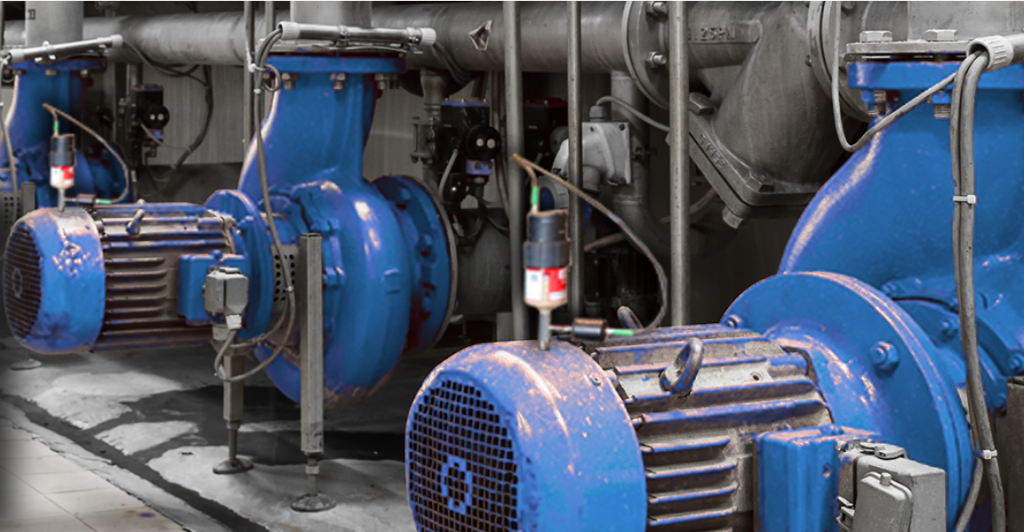
- Initial evaluation: Identification of critical equipment or structures where vibration, misalignment, resonance or other mechanical failure problems are suspected. This may include pumps, motors, fans, piping or metal structures.
- Video capture: Installation of the Iris M™ system focused on the area of interest. No physical contact with the equipment is required, allowing the analysis to be performed without stopping the operation.
- Processing and amplification: Post processing of recorded video using proprietary software to analyze and amplify movements invisible to the human eye. Each pixel acts as a sensor, generating millions of data points. Different options can be applied to focus on specific frequencies, phase maps, motion maps, inspection of moving elements, …
- Technical analysis: Data analysis to identify faults such as: misalignment, unbalance, structural resonances, structural clearances, lack of stiffness, problems in couplings, belts or shafts.
- Report and recommendations: Visual and technical report generation that facilitates communication between technicians, engineers and management. This enables informed maintenance decisions.
- Follow-up: After corrections have been applied, the analysis can be repeated to verify the effectiveness of the actions taken.