
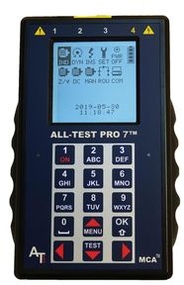
Motor Circuit Analysis™ (MCA™). Motor test instrument.
The seventh generation of ALL-TEST PRO equipment represents innovation and proven, patented technology that complements traditional vibration, temperature, and ultrasonic testing methods, providing instant feedback on the health of your engine.
Perform predictive maintenance on electric motors to ensure their reliability in the field and maximize productivity.
ALL-TEST PRO 7™ – Patented technology
Analysis of the MCA™ Motor Circuit
Rapid assessment of the entire motor circuit. A non-destructive, de-energized testing method to evaluate the condition of a motor from the Motor Control Center (MCC) or directly at the motor. Immediate and comprehensive information on the condition of the stator, rotor, connections, contamination, and insulation to ground.
Proprietary dynamic signatures of the stator and rotor
It is used to evaluate the condition of the stator and squirrel-cage rotor in a single test. Ideal for testing new and repaired motors prior to acceptance.
Proprietary Static™ Test (TVS™).
The TVS is a value calculated from the three-phase MCA static test and is used as a reference value for the motor. Common types of faults in the rotor and stator windings will affect the TVS.
Get a quick return on your investment
- Finding a single defect using the AT7™ results in significant cost and production savings.
- Test the motors before installing them to ensure proper installation and prevent them from failing during startup.
- Test the engines in the warehouse to make sure they are in good condition and ready for service.
- Troubleshoot motors that have stopped working either from the control panel or directly at the motor.
Types of engines
For all types of electric motors (any voltage), including AC (induction and synchronous) and DC (series, shunt, and compound), as well as transformers, generators, traction motors, machine tool servos, single-phase motors, and coils.
Condition Assessment
The electrical condition of all motor components is evaluated, including, but not limited to, the induction and rotor windings, DC field windings, and the armature; field and rotor coils in synchronous motors; primary and secondary windings of transformers; and associated connections and cables.
Features
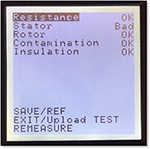 On-screen instructions for automatic testing
Test path and trends
Results in less than 3 minutes
Detects faults at earlier stages
Tests can be performed from a distance of over 300 meters
MCA PRO™ Software
- It is used with three-phase and single-phase AC motors, DC motors, series motors, and transformers.
- Single-coil testing – for testing and comparing up to 4 coils.
- Designed for predictive maintenance, MCA PRO™ allows you to create an unlimited number of maintenance routes and schedules.
- Routes can have up to 100 devices
MCA Software PRO™ Enterprise – This version includes all the same features and functions as MCA PRO™, plus multi-user support. Licenses for 2, 5, 10, and 25 users are available. It can be installed on as many client computers as needed. Databases can be shared.
ALL-TEST PRO 7™ PROFESSIONAL and ALL-TEST PRO 7™
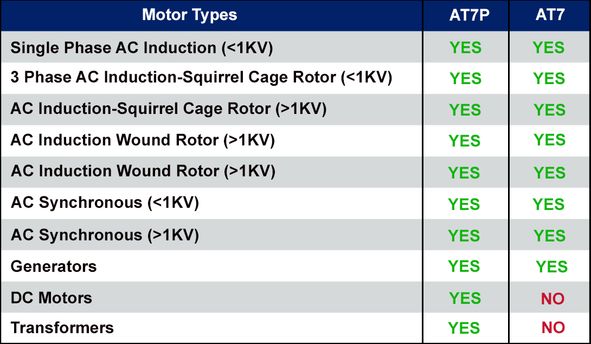
Specifications
ALL-TEST PRO 7™ PROFESSIONAL includes:
- 3 test leads with Kelvin clamps and push-pull connectors
- 1 test lead with a 4 mm safety plug and an MC “Dolphin” clamp
- A charger adapter with a universal input of 100–240 VAC and an output of 9 VDC at 1.7 A
- An MCA PRO™ software adapter and a software download certificate
- 1x 1-meter USB cable
- A durable, sturdy hard case with a pre-cut foam insert
- User Manual
- Warranty: 1-year limited warranty; optional 2-year warranty with calibration
Documents
Other products you may be interested in
-
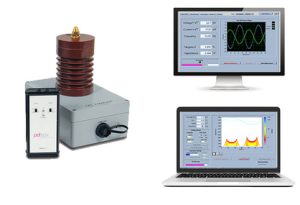
DeltaMaxx™
The DELTAMAXX determines the dielectric power factor, capacitance and partial discharge of generator windings for…
-
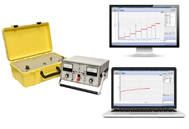
DCR-60™
DCR 60- identifies stator ground wall insulation problems by off-line DC high voltage ramp test…
-
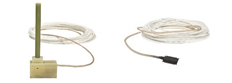
Rotary Flow Sensors
Rotor flux sensors detect the magnetic flux emanating from each rotor pole in synchronous generators…
-
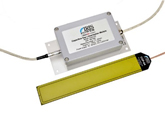
AirGap sensors
AirGap Capacitive Sensors measure the distance between the rotor and stator in hydroelectric generators to…