
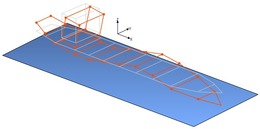
Structural vibration diagnosis
Structural vibrations in ships can affect their integrity, safety and operational efficiency. These vibrations can originate from misalignments in propulsion systems, interaction with waves or problems in the structural design of the hull and machinery. Vibration analysis of ship structures is a fundamental technique for detecting anomalies and applying corrective measures before critical failures occur.
Preditec offers specialized services in ship vibration diagnostics, including modal analysis and beam ship studies, ensuring the reliability and optimal performance of vessels.
Preditec’s specialized services in vibration analysis on ships
Analysis of beam-vessel modes and local modes
- Evaluation of hull flexure and its impact on vessel operability.
- Analysis of stress distribution and resonances in the structure.
- Detection of problems in roofs, substructures and machinery.
Operational modal analysis technique
- Identification of the natural vibration frequencies of the ship in navigation.
- Evaluation without the need to apply external forces, taking advantage of natural excitations.
- Optimization of structural stiffness to avoid damaging resonances.
Impact technique for vibration diagnosis in naval structures
- Measurement of structural response through controlled impacts.
- Detection of vibration modes in specific elements of the vessel.
- Diagnosis of possible structural or mechanical failures.
Other services you might be interested in

More information about Structural vibration diagnosis
What are vibration problems in ships?
Vibration problems on ships refer to abnormal oscillations in the vessel’s structure and machinery. These vibrations can cause structural fatigue, affect habitability and increase wear of mechanical components.
Common causes of vibrations in naval structures
- Misaligned or unbalanced propulsion systems, which generate vibrations in the hull structure.
- Structural resonances, caused by the interaction between the vessel’s natural frequency and vibrations induced by propulsion or waves.
- Adverse operating conditions, such as wave action, can generate additional stresses on the ship’s structure.
- Vibrations in decks and auxiliary machinery, which may affect the comfort of the crew and passengers.
Impact of vibration on ship safety and efficiency
- Reduction of the useful life of the structure and machinery.
- Accelerated wear of mechanical and electrical components.
- Decreased comfort on board due to vibrations on decks and accommodation areas.
- Increased fuel consumption due to inefficient propulsion systems.
Vibration analysis methods for ships
Modal analysis in naval structures
- Determination of natural frequencies of the structure.
- Evaluation of structural stiffness and detection of possible fatigue problems.
- Optimization of structural design to reduce vibration levels.
Evaluation of structural vibrations on ships
- Measurements on roofs, substructures and machinery.
- Generation of vibration maps to detect critical areas.
- Monitoring of shaft lines and propulsion systems.
Vibration diagnostic techniques on vessels
- Impact technique, used to identify local modes of vibration in roofs and machinery.
- Operational modal analysis, which takes advantage of the natural excitations of navigation to study the vibrational response of the vessel under real conditions.
- Analysis of beam-ship modes, allowing to evaluate the global bending of the ship structure.
Benefits of accurate ship vibration analysis
Improved structural safety of ships
- Prevention of structural fatigue problems by identifying critical resonances.
- Reduced risk of serious mechanical failure under adverse operating conditions.
- Increased comfort for crew and passengers by minimizing vibrations on decks and rest areas.
Optimization of propulsion system performance
- Vibration reduction on shaft lines and propellers to improve efficiency.
- Reduced wear on engines and transmission systems.
- Precise alignment and balancing adjustment to optimize fuel consumption.
Reduced maintenance and repair costs
- Early identification of structural problems to avoid costly interventions.
- Longer service life of mechanical components and naval structures.
- Reduction of unplanned shutdowns thanks to the implementation of predictive strategies.