
OBJECTIVE
Intelligent monitoring for the 1st Utility-Scale solar plant with thermal storage by Crescent Dunes
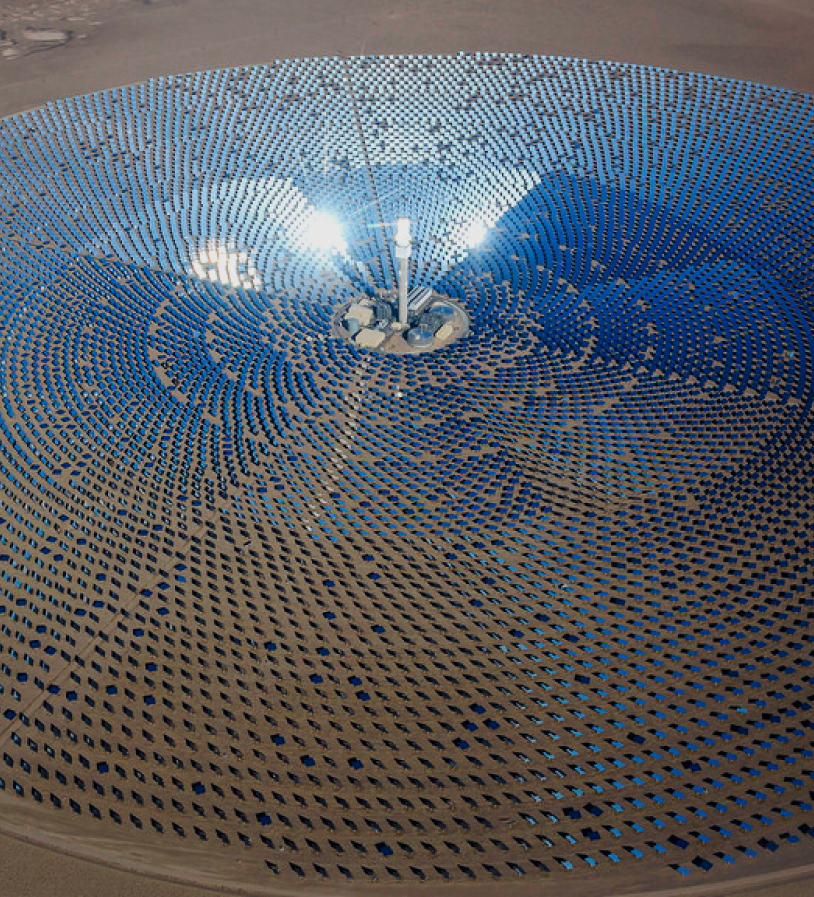
Solar Reserve is a leading global developer of solar energy projects that include the generation of electricity through solar thermal energy and photovoltaic panels. In addition, Solar Reserve has patented an advanced technology that allows energy storage integrated into the system itself to solve the problems of power outages experienced by other renewable energy sources. SolarReserve’s Crescent Dunes project facility in Nevada is the first utility-scale facility in the world with advanced molten salt tower energy storage capability.
The project generates electricity from solar energy on a regular and reliable basis to sufficiently power 75,000 homes in Nevada during peak demand periods, day and night, and regardless of weather conditions.
At the end of 2015, the project became fully operational and is delivering 110 megawatts of electricity and storing another 1,100 megawatts/hour, thanks to the only molten salt power tower in a utility-scale project in the world. It is precisely this storage capacity that allows this facility to produce more than twice the net annual output (kilowatt hours) of an equivalent solar or photovoltaic project.
The objective was to provide the customer with a 100% functional and customized system, so we integrated sensors from different manufacturers and models, supplied monitoring modules mounted in cabinets ready for installation in the plant, engineering of the monitoring project, configuration of the monitoring systems and communications, FAT testing, validation of the existing installation and wiring, SAT plant acceptance tests, training in the operation of the system and alarm settings.
Execution Date:
2015
Location:
USA
Sector:
Energy

HOW WE MADE IT HAPPEN
Technology applied to renewable energies, a hybrid cooling system with low water consumption
The Solar Reserve project is the clean energy project in the United States with the most reliable and advanced on-demand (day and night) energy storage system in the industry, without the need for natural gas or oil backup, making it totally emission-free, and represents a real breakthrough in the development of technology applied to renewable energies. The design of this project involves a significant reduction in the use of water for cooling the plant, thanks to a hybrid cooling system with low water consumption, with a reduction for the environment of 300,000 tons of CO2 emissions each year.
The solution provided consists of continuous monitoring of critical equipment for the uninterrupted operation of the solar thermal plant, including recirculation pumps, condensate pumps, water pumps and molten salt pumps. The system, in addition to full machine diagnostic capabilities, includes the integration of the processed vibration parameters into distributed control systems (DCS) and motor control systems (MCM) for supervision and eventual tripping of the machines.
OUR CONTRIBUTION
What products and services we applied to the project
- Products
- Training
- Services

Asset Reliability Practitioner (ARP-L) Reliability Leader
The Asset Reliability Specialist [ARP-L] "RELIABILITY PROGRAM LEADER" course encompasses not only the technical knowledge, but also the roles necessary to be able to lead teams, communicate frequently and clearly, and have strong budget and project management skills.
Nothing Found
RESULTS AND ACHIEVEMENTS
Industrial automation
Continuous monitoring of critical equipment for the uninterrupted operation of the solar thermal plant increases plant safety and prevents unexpected shutdowns.
The great importance of these systems lies in their criticality for the correct operation of the plant, since an unforeseen or catastrophic stop in the molten salt system can cause solidification of these salts in the pipes and pumps. If this were to occur, it would be necessary to scrap the affected installation and build it again.
1.100
megawatt-hours of storage
300.000
tons less CO2 emitted each year