Share:

Balancing

Dynamic balancing service for rotating shafts of fans, turbines...

On-site rotor balancing service – PRE-7060

The On-Site Rotor Dynamic Balancing Service uses the influence coefficient technique to establish the matrix relationship between the vibration of the rotor on its own supports and the residual unbalance due to mass eccentricity about the center of rotation.

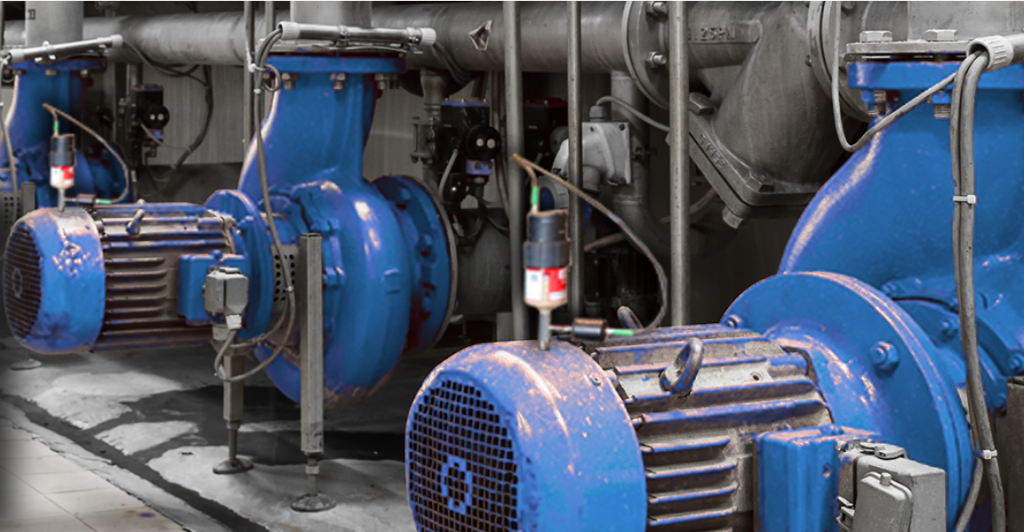
The “in-situ” balancing technique is useful on open access rotors such as fans, rollers, spindles, or also on closed access rotors with pre-installed balancing plates, as in the case of vertical pumps, turbines, etc.

The main advantage of balancing “in situ” is the economic savings in the disassembly, transport, bench mounting and assembly of rotors of large dimensions or weights, or installed in inaccessible places that require crane or other dangerous operations.

The execution of balancing work in accordance with the recommendation of ISO-1940 provides the following advantages:

  • Reduced fatigue load on bearings and increased bearing and bearing life.
  • Reduction of vibrations and noises that could affect the quality of the processed product.
  • Savings in energy consumption in the rotor drive and less heating in electric motors.
  • Increased equipment and process reliability, as well as operational safety by preventing possible rotor detachment due to centrifugal force.

Other services you might be interested in

  • Root Cause Analysis (RCA)

    Root Cause Analysis (RCA)

    Root Cause Analysis (RCA) is a fundamental methodology for asset management that goes beyond simple failure correction. It consists of an in-depth investigation to identify the factors that caused a failure, rather than just treating…

  • Criticality Analysis

    Criticality Analysis

    Criticality Analysis is a strategic process that allows you to classify your company's assets according to their potential impact on your operation. This assessment considers not only the probability of failure, but also the consequences…

  • Failure Modes and Effects Analysis (FMEA/FMEA)

    Failure Modes and Effects Analysis (FMEA/FMEA)

    Failure Modes and Effects Analysis (FMEA) is a proactive and systematic tool used to identify and evaluate the possible failure modes of an equipment, process or system, as well as their causes and the effects…

  • Lubrication by condition

    Lubrication by condition

    Condition Lubrication is an advanced strategy that uses ultrasonic technology to monitor the actual condition of bearings and apply the exact amount of lubricant at the right time. This innovation eliminates guesswork, reduces waste and…