
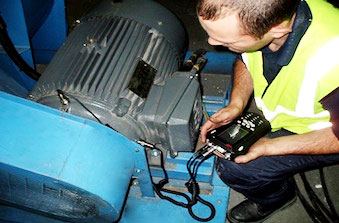
Implementation of technologies for PdM
The implementation of PdM (predictive maintenance) technologies is a key factor in the modernization of industrial maintenance strategies. With the use of advanced tools such as vibration analysis, ultrasound, thermography, oil analysis and MCA (electric motor circuit analysis), companies can anticipate failures, reduce downtime and optimize their production processes.
Preditec offers a comprehensive service for the implementation of these technologies, providing training, support and technical assistance for industrial equipment to achieve maximum performance and reliability.
Preditec’s solutions in the implementation of technologies for PdM
Preditec’s PRE-7034 service is designed to facilitate the implementation of predictive maintenance in companies wishing to manage their own PdM technologies.
PdM education and training
- Basic training in predictive maintenance concepts.
- Advanced training in predictive technologies and data analysis.
Configuration and integration of PdM technologies
- Identification and marking of measurement points on machines.
- Training in field data collection with predictive analytics collectors.
Analysis and generation of diagnostic reports
- Communication between data collectors and predictive analytics software.
- Training in obtaining and interpreting exception reports.
Technical support and remote assistance
- Direct communication with Preditec for specialized technical assistance.
- Access to Wikipred, a predictive maintenance knowledge database.”
Other services you might be interested in


More information about Implementation of technologies for PdM
What is the implementation of technologies for PdM?
The implementation of predictive maintenance technologies consists of integrating advanced tools for real-time machinery monitoring and diagnostics. This process is essential for companies that want to optimize their maintenance or that are creating a new predictive maintenance department.
Preditec’s PdM technology implementation service – PRE-7034 focuses on providing users with the knowledge and tools necessary to operate predictive systems autonomously in their industrial plants.
Key technologies for PdM implementation
Predictive technologies make it possible to detect anomalies before they become critical failures, avoiding economic losses and unplanned downtime.
Predictive vibration analysis systems
- Identification of imbalances, misalignments and structural problems in rotating machinery.
- Continuous monitoring for early detection of bearing and gear failures.
Ultrasound for predictive maintenance
- Detection of air and gas leaks and problems in lubrication systems.
- Identification of electrical faults, such as partial discharges in electrical panels.
Thermography applied to equipment diagnostics
- Control of overheating in motors, electrical panels and heat exchangers.
- Identification of thermal losses affecting energy efficiency.
Oil analysis for predictive diagnostics
- Evaluation of lubricant degradation to optimize changeover periods.
- Identification of wear particles in bearings, gears and bearings.
- Detection of solid and liquid contaminants that affect lubrication.
Electric motor circuit analysis (MCA)
- Diagnosis of faults in windings and insulation of electric motors.
- Evaluation of electrical connections and detection of short circuits.
Benefits of implementing predictive maintenance technologies
The correct integration of PdM technologies provides multiple benefits for industrial companies, enabling greater operational efficiency and cost reduction.
- Reduced downtime: detects failures at an early stage, avoiding unplanned shutdowns and production losses.
- Maintenance optimization: allows scheduled interventions based on the actual condition of the equipment, minimizing unnecessary inspections.
- Longer machinery life: by detecting anomalies before they cause major damage, the useful life of industrial assets is extended.
- Reduced operating costs: reduced repair and spare parts costs by applying a predictive approach based on real data.
- Improved plant safety: minimization of risks of critical failures in strategic equipment, ensuring a safer working environment.